
Unpacking the Meaning Behind Chinese Internet Memes
- Date:
- Views:297
- Source:The Silk Road Echo
If you've spent any time scrolling through Chinese social media—whether it's Weibo, Douyin, or Xiaohongshu—you've probably come across a bizarre image of a cat with huge eyes captioned 'I'm not like other cats,' or someone yelling 'Emotional breakdown!' in all caps. Welcome to the wild, witty, and wonderfully absurd world of Chinese internet memes.
Unlike Western memes that often rely on dry sarcasm or pop culture references, Chinese memes blend satire, wordplay, and cultural nuance into something uniquely expressive. They're not just jokes—they're social commentary, emotional outlets, and sometimes even political dissent disguised as silliness.
The Language of Laughter: How Chinese Memes Work
One key reason these memes hit differently? Language. Mandarin’s tonal nature and rich homophones make it a playground for puns. Take the phrase wǒ tài nán le (我太难了), which literally means 'I’m too difficult' but actually conveys 'I’m overwhelmed.' It blew up in 2019, paired with a cartoon panda looking stressed. The meme was so relatable it spawned merchandise, songs, and even academic papers.
Another favorite is zǎo ān gà gē (早安嘎嘎), or 'Good morning, quack quack'—a nonsense greeting using duck sounds that mocks overly cheerful morning routines. It’s absurd, yes, but also a subtle jab at workplace hustle culture.
Memes as Social Pressure Valves
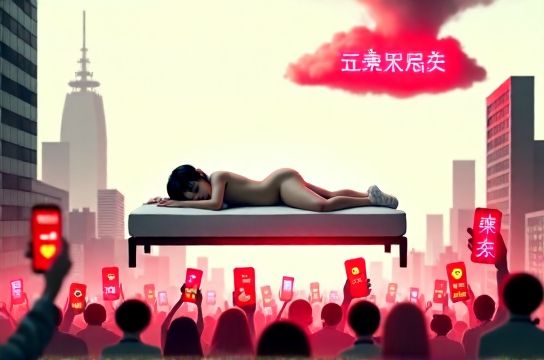
In a society where open criticism can be risky, memes become safe spaces for venting. Consider the rise of tǎng píng (躺平), or 'lying flat'—a lifestyle rejection of relentless work expectations. A simple image of someone lying motionless on the floor went viral, symbolizing quiet resistance against burnout. According to a 2023 survey by Southern Weekly, over 62% of urban millennials identified with the concept.
Here’s a look at some iconic Chinese memes and what they really mean:
| Meme | Literal Translation | Real Meaning | Year Popularized |
|---|---|---|---|
| 我太难了 (wǒ tài nán le) | I’m too difficult | Emotional overload / stress | 2019 |
| 躺平 (tǎng píng) | Lying flat | Rejecting societal pressure | 2021 |
| 内卷 (nèi juǎn) | Involution | Self-defeating competition | 2020 |
| 打工人 (dǎ gōng rén) | Working stiff | Sarcastic pride in grind culture | 2020 |
From Jokes to Jobs: The Meme Economy
These aren’t just fleeting trends—they’ve become big business. Brands like Li-Ning and Pinduoduo now use meme-inspired campaigns to connect with Gen Z. In 2022, a single 'Lying Flat' themed ad campaign boosted engagement by 40%, according to Tencent Marketing Solutions.
Even government agencies have jumped on board. The Communist Youth League once tweeted a meme of Chairman Mao with sunglasses and the caption 'Stay cool, stay revolutionary'—proving that if you can’t beat ‘em, meme with ‘em.
Why This Matters Beyond the Laughs
At their core, Chinese internet memes are more than humor—they’re a digital diary of a generation navigating rapid change, economic anxiety, and identity. They reflect resilience, creativity, and a desire to be heard—often when words alone won’t do.
So next time you see a duck saying 'quack' at 3 a.m., don’t just laugh. Read between the lines. Because in China’s online world, a joke might just be a cry for help—or a quiet revolution.