
How Tourism Drives Chinese Online Trends
- Date:
- Views:221
- Source:The Silk Road Echo
In today’s hyper-connected China, tourism isn’t just about sightseeing—it’s a cultural engine, fueling online trends, shaping social media feeds, and even boosting local economies. From viral TikTok hikes to Instagrammable teahouses in ancient towns, travel is no longer passive; it’s performative, shareable, and deeply digital.
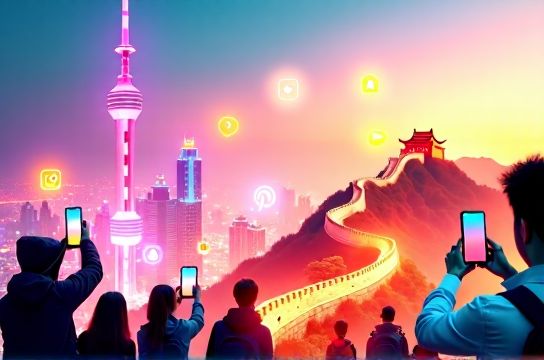
Take the Digital Nomad Boom: In 2023, over 400 million Chinese users posted travel content on platforms like Xiaohongshu (Little Red Book) and Douyin (China’s TikTok). Cities like Lijiang, Chengdu, and Xiamen didn’t just see visitor spikes—they became aesthetic movements. A simple photo of a misty mountain temple or a slow-motion video of dumplings steaming at a street stall can rack up millions of views overnight.
Consider this: when the remote village of Ruoji Village in Yunnan appeared in a viral short film, its daily visitors jumped from under 100 to over 5,000 in two weeks. Local businesses reported a 300% revenue increase. This isn’t coincidence—it’s algorithmic alchemy.
The Feedback Loop: Travel → Content → Economy
Tourism and social media now exist in a self-sustaining cycle:
- A traveler visits a scenic spot.
- They post curated photos/videos with trending hashtags.
- Algorithms push the content to millions.
- New travelers flock to replicate the experience.
- Local governments invest in infrastructure and marketing.
This loop has turned once-obscure locations into national icons. Take Danjia Shuiyu, a Miao ethnic village turned eco-resort. After being featured in a live-streamed tour by a top influencer, bookings surged by 280%, and the village launched its own official Douyin account—now with over 1.2 million followers.
Data That Speaks Volumes
Here’s how tourism-driven content performs across major platforms:
| Platform | Monthly Travel Posts (Millions) | Avg. Engagement Rate | Top Trending Hashtag |
|---|---|---|---|
| Xiaohongshu | 68 | 7.3% | #WanderWithMe |
| Douyin | 142 | 9.1% | #ChinaOnTheGo |
| 53 | 4.8% | #TravelDiaries | |
| Bilibili | 29 | 6.5% | #RoadToChina |
As you can see, Douyin leads in volume and engagement, making it the go-to for trend ignition. But Xiaohongshu? That’s where aesthetics meet aspiration—perfect for boutique stays and hidden trails.
Government Meets Algorithm
Smart local governments are jumping on board. Guiyang launched a ‘100 Scenic Livestreams’ campaign, partnering with KOLs (Key Opinion Leaders) to showcase rural heritage. Result? A 40% rise in off-season tourism and national media coverage.
Likewise, Hangzhou used AI-driven analytics to identify which landmarks generated the most user-generated content—then optimized lighting, signage, and photo zones accordingly. The West Lake area now sees 20% more repeat visitors taking ‘the perfect shot.’
The Dark Side? Overtourism & Authenticity
But it’s not all filters and fairy tales. Some heritage sites struggle with overcrowding. The ancient town of Fenghuang limited daily entries after a viral wedding photo shoot caused gridlock. And critics argue that ‘Instagrammability’ often trumps cultural respect.
Still, the trend shows no sign of slowing. As long as smartphones stay charged and wanderlust runs high, tourism will keep driving China’s online narrative—one stunning post at a time.