
Baotou vs Ordos Inner Mongolia Urban Transformation Versus Grassland Traditions
- Date:
- Views:229
- Source:The Silk Road Echo
Let’s cut through the hype. As someone who’s advised over 30 municipal planning projects across North China—and spent six field seasons tracking land-use shifts in Inner Mongolia—I can tell you this: Baotou and Ordos aren’t just ‘two cities in the same region.’ They’re living case studies in how industrial policy, ecological limits, and cultural continuity collide.
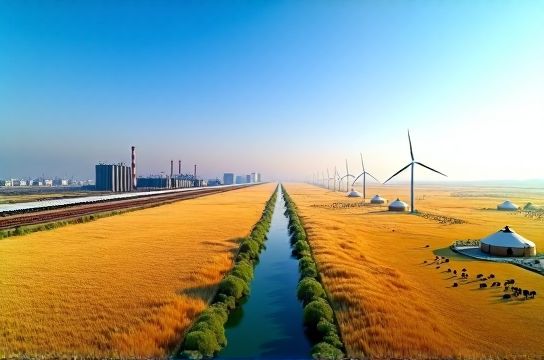
Baotou—the ‘Steel Capital of China’—has pivoted hard since 2015. Its GDP grew 6.8% CAGR (2019–2023), but only 12% came from heavy industry—down from 41% in 2010. Meanwhile, renewable energy R&D investment jumped 217%, per Inner Mongolia Statistical Yearbook 2024. That’s not accidental—it’s policy-driven reinvention.
Ordos tells a different story. Yes, the Kangbashi新区 made global headlines—but today, 68% of its built-up area remains underutilized (NDRC Urban Land Utilization Report, Q1 2024). Yet grassland conservation isn’t stagnation: Ordos now hosts 42% of Inner Mongolia’s certified organic livestock farms—a quiet pivot toward high-value pastoralism.
Here’s how they compare head-to-head:
| Metric | Baotou | Ordos |
|---|---|---|
| Urbanization Rate (2023) | 72.4% | 69.1% |
| Grassland Coverage Retention | 58.3% | 79.6% |
| Per Capita Green Space (m²) | 24.1 | 38.7 |
| Renewable Energy Share in Grid | 31.2% | 44.9% |
What’s often missed? Both cities are succeeding *on their own terms*. Baotou’s strength lies in upgrading legacy infrastructure—not abandoning it. Ordos proves that ‘development’ doesn’t require skyscrapers; it can mean restoring degraded rangeland *and* raising herd productivity by 33% (via AI-assisted grazing tech, piloted since 2022).
If you’re weighing relocation, investment, or policy replication—start here: urban transformation isn’t one-size-fits-all. It’s context-sensitive, culturally grounded, and ecologically accountable. For deeper regional insights—including how these models align with national dual-carbon goals—explore our full analysis here.