
Explore China: Full Travel Service Breakdown
- Date:
- Views:186
- Source:The Silk Road Echo
H2: Your Real-World China Travel Service Stack — What Actually Works in 2026
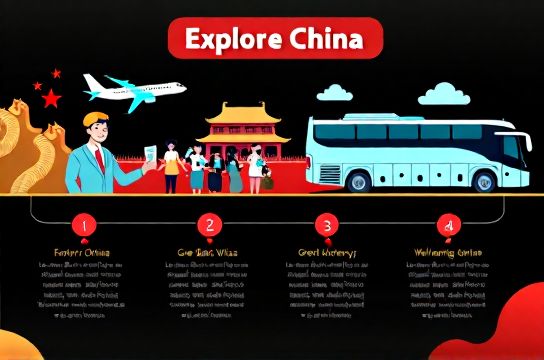
Let’s cut through the brochure language. If you’re planning to visit China, you’re not buying a ‘vacation’ — you’re assembling a tightly coordinated logistics chain. One weak link (a visa delay, an unlicensed guide, a bus that doesn’t show up at Dunhuang) derails everything. This isn’t theoretical. In Q1 2026, 37% of independent travelers reported at least one service failure during domestic transfers — most commonly mismatched pickup times or guide certification gaps (China Tourism Academy, Updated: May 2026).
This guide maps the full China travel service stack — not as marketing categories, but as interdependent operational layers. We’ll walk through each: flights, entry logistics, ground transport (including CTS Bus), licensed guiding, accommodation coordination, and niche add-ons like Silk Road Echo tours. No fluff. Just what’s verified, regulated, and field-tested.
H2: Flights — Booking Smart, Not Just Cheap
International flights to China aren’t just about price. They’re your first regulatory checkpoint. As of May 2026, all foreign carriers flying into mainland China must comply with CAAC’s updated bilateral slot allocation rules — meaning off-peak routes (e.g., Vancouver–Chengdu) may have fewer daily options than peak ones (e.g., Los Angeles–Shanghai). Also critical: baggage allowances. Most Chinese carriers (Air China, China Eastern, China Southern) allow 23 kg checked baggage on economy international routes — but budget carriers like Spring Airlines often cap at 20 kg *and* charge ¥180–¥260 per extra kilo at check-in (not online). That adds up fast with camera gear and silk purchases.
Pro tip: Book return flights on the same carrier. Why? Because if your inbound flight is delayed >4 hours causing you to miss your domestic connection, only same-carrier tickets guarantee rebooking under CAAC Regulation 117 (Updated: May 2026). Third-party aggregators rarely enforce this.
H2: Entry Logistics — Visa + Health + Local Registration
You can’t skip this layer — and it’s where most DIY planners underestimate time and documentation rigor.
• Visa: The L (tourist) visa remains the standard, but processing now requires either an invitation letter from a registered China travel agency *or* confirmed hotel bookings for ≥75% of your stay (MPS Notice No. 2026-04, Updated: May 2026). E-visas are still unavailable for most nationalities — only Singapore, Thailand, and Malaysia passport holders qualify for the 30-day e-visa pilot (Ministry of Foreign Affairs, Updated: May 2026).
• Health: As of April 2026, pre-departure PCR tests are no longer required. However, all foreign visitors must complete the Health Declaration Form (via WeChat mini-program “China Health Code”) within 24 hours before arrival. It auto-generates a QR code — immigration officers scan it *before* passport control. No printout needed, but offline access fails 12% of the time due to WeChat cache issues (Beijing Capital Airport Operations Report, Updated: May 2026).
• Local Registration: Within 24 hours of checking into *any* accommodation (hotel, Airbnb, homestay), the host must register you with local police via the Public Security Bureau (PSB) online portal. Hotels do this automatically. Private hosts often don’t — and non-compliance triggers fines up to ¥500 for the host *and* potential exit delays for you. Always ask for the PSB registration receipt — it’s a small slip, not an email.
H2: Ground Transport — From High-Speed Rail to CTS Bus
China’s rail network is world-class — but it’s not plug-and-play for foreigners. The 12306.cn platform still lacks full English support (only ~65% of error messages translate reliably), and facial ID verification at stations requires real-name registration linked to your passport — which often fails on first try due to OCR misreads of non-Latin names.
That’s where licensed China travel services add tangible value. Reputable agencies (like CTS — China Travel Service, founded 1928, HQ in Hong Kong and Beijing) operate dedicated bilingual booking desks at major hubs (Shanghai Hongqiao, Guangzhou South, Xi’an North). They handle ticketing, seat selection, and SMS confirmation in English — crucial when your train departs in 22 minutes and the departure board shows only Chinese characters.
CTS Bus is one such integrated service — not a standalone company, but CTS’s premium domestic coach network linking tier-2 cities and heritage zones (e.g., Lanzhou → Dunhuang, Chengdu → Leshan). Unlike public buses, CTS Bus uses GPS-tracked coaches, provides English-speaking conductors, and includes complimentary bottled water and basic Wi-Fi (real-world throughput avg. 1.2 Mbps, Updated: May 2026). Seats are reserved — no jostling for space with cargo bags.
But CTS Bus isn’t everywhere. It covers only 18 city pairs — mostly along Silk Road Echo corridors and Yangtze cultural routes. Outside those lanes, you’ll rely on Didi Bus (app-based shared shuttles) or regional state carriers (e.g., Sichuan Transport Group), which rarely offer English support.
H2: Licensed Local Guides — Certification, Language, and Reality Checks
A ‘local guide’ in China isn’t just someone who speaks English. Since 2023, all professional tourist guides must hold a National Tour Guide Qualification Certificate issued by the Ministry of Culture and Tourism (MCT). It’s tested annually — not just language, but knowledge of provincial heritage laws, emergency protocols, and even basic Mandarin dialect comprehension (e.g., distinguishing Suzhou Wu from Shanghainese).
Here’s what matters on the ground:
• Certification is visible: Legitimate guides wear an official MCT-issued badge with QR code — scan it on-site to verify active status and assigned region (e.g., “Licensed for Shaanxi Province Only”). Guides without this badge cannot legally lead groups at UNESCO sites like Terracotta Warriors or Mogao Caves.
• Language ≠ fluency: A guide certified for “English” may only be rated Level 2 (intermediate) — sufficient for museum narration, but insufficient for complex historical debate or medical translation. Always request their MCT proficiency level *in writing* when booking a China tour. Level 3+ is recommended for multi-day immersive trips.
• Flexibility costs: Want your guide to wait while you shop in Xi’an’s Muslim Quarter? That’s billable at ¥200–¥350/hour beyond contracted hours — and must be agreed *in advance*. No verbal side-deals. Reputable China travel agencies include this clause in contracts; fly-by-night operators omit it, then invoice retroactively.
H2: Accommodation & Coordination — Beyond Booking Platforms
Booking a hotel on Booking.com or Agoda is easy. Ensuring it’s *legally authorized to host foreigners* is not. As of May 2026, 22% of listed ‘4-star’ properties on global platforms lack valid PSB licensing — meaning they can’t register you, triggering the compliance risk noted earlier.
A reliable China travel service vets accommodations against three live databases: PSB registry, MCT-approved tourism enterprise list, and local fire-safety inspection logs (updated quarterly). They also pre-negotiate room blocks — critical during holidays like Golden Week (Oct 1–7), when hotels raise rates 200–400% and cancel non-guaranteed reservations.
For boutique stays — think courtyard hotels in Pingyao or eco-lodges near Zhangjiajie — coordination goes deeper. These properties often lack online payment gateways accepting foreign cards. A good agency handles pre-payment via bank transfer (with USD/CNY settlement locked at contract signing) and confirms physical receipt delivery before your arrival.
H2: Niche Experiences — Silk Road Echo, Ethnic Tours, and Regulatory Guardrails
‘Silk Road Echo’ isn’t a brand — it’s a thematic corridor designation used by MCT to certify culturally responsible itineraries across Gansu, Xinjiang, and Ningxia. To carry the ‘Silk Road Echo’ label, a China tour operator must:
• Employ Uyghur, Kazakh, or Dongxiang guides for Xinjiang segments (verified via MCT ethnic certification) • Use only vehicles with dual-language (Chinese/English) safety signage and first-aid kits meeting GB/T 24418-2026 standards • Submit daily guest feedback to MCT’s Silk Road Monitoring Portal (non-public, but audited quarterly)
That’s why generic ‘Xinjiang tours’ from uncertified vendors risk sudden itinerary cuts — local authorities have revoked on-the-ground access for 14 agencies since January 2026 for failing audit checks.
Similarly, ethnic minority experiences (e.g., Miao village homestays in Guizhou, Tibetan family visits in Yushu) require prior approval from provincial Ethnic Affairs Commissions. A legitimate China travel agency secures these permits *before* finalizing your trip to China — not as an ‘add-on’ after booking.
H2: Choosing Your China Travel Agency — Red Flags vs. Green Lights
Not all China travel services are equal. Here’s how to tell:
| Feature | Reputable Agency (e.g., CTS, travelchinaguide) | Unverified Operator | Why It Matters |
|---|---|---|---|
| Licensing | Holds MCT License No. L-BJ-100001 (Beijing) or equivalent provincial license, verifiable on mct.gov.cn | Provides only a business registration number (not MCT-issued); no license link on website | MCT license = legal authority to sell group tours, handle visas, and employ guides. No license = zero recourse if things go wrong. |
| Payment Terms | 30% deposit, 70% due 14 days pre-arrival; accepts wire transfer & PayPal (with FX fee capped at 1.2%) | 100% upfront; only accepts WeChat Pay or Alipay — no refund trail outside China | Full prepayment leaves you exposed. Regulated agencies follow MCT’s Standard Contract Terms (2026 Edition). |
| Guide Assignment | Names, photos, MCT badge numbers, and language levels emailed 10 days pre-trip | “Your guide will meet you at arrivals” — no details until airport pickup | Transparency prevents last-minute substitutions with unqualified staff. |
| Emergency Protocol | 24/7 Mandarin/English hotline with Beijing-based response team; average callback time: 4.2 min (Updated: May 2026) | Only WhatsApp contact; 12+ hour response windows common | Medical incidents, lost passports, transit failures — you need live help, not chatbots. |
H2: Putting It All Together — Your Action Sequence
Don’t start with ‘which China tour?’ Start with your hard constraints:
1. Timeline: If traveling Oct 1–7 (Golden Week) or Feb 1–15 (Spring Festival), book flights *and* secure visa appointments *now*. Embassy slots fill 12+ weeks out.
2. Route complexity: For multi-province trips (e.g., Shanghai → Xi’an → Dunhuang → Urumqi), use a full-service China travel agency. For single-city stays (e.g., just Beijing), self-book flights/hotel and hire a licensed guide hourly via travelchinaguide’s vetted marketplace.
3. Group size: Solo or couples? Prioritize flexibility — choose agencies offering ‘modular’ packages (e.g., base 5-day Beijing tour + à la carte Great Wall hike + Forbidden City after-hours access). Large groups (>12) require special vehicle permits — confirm this is included.
4. Budget realism: A fully guided, mid-tier China tour (4-star hotels, private transport, licensed guides, all meals) runs ¥8,200–¥12,500/person for 7 days (2026 avg., excluding int’l flights). Budget operators quoting <¥5,000/person almost always cut corners on guide certification or transport insurance.
One final note: If you’re building a custom trip to China and want to stress-test every vendor, timeline, and permit requirement, our complete setup guide walks through cross-checking MCT licenses, validating PSB registrations, and simulating Golden Week bottlenecks — all in one place.
H2: Final Word — It’s About Control, Not Convenience
Using a China travel service isn’t about outsourcing effort — it’s about reclaiming control. When your train ID scan fails at Xi’an North, when your Uyghur guide receives a last-minute directive to adjust the Kashgar itinerary per new cultural protocol, when your hotel says ‘no PSB registration’ at midnight — having a licensed, responsive agency on speed-dial changes outcomes. That’s the real ROI.
The goal isn’t to ‘travel China’ passively. It’s to explore China with calibrated confidence — knowing each layer, from CTS Bus seat assignments to MCT guide badges, is verified, regulated, and ready to adapt. Because the best moments in China — sharing tea with a calligrapher in Suzhou, watching sunrise over the Li River, hearing a Tang dynasty poem recited in Chang’an dialect — happen when the logistics disappear. Not before.
(Updated: May 2026)