
Affordable China Tour Packages with CTS Bus & Transfers
- Date:
- Views:192
- Source:The Silk Road Echo
H2: Why Affordable China Tours Still Deliver Real Value — Without Cutting Corners
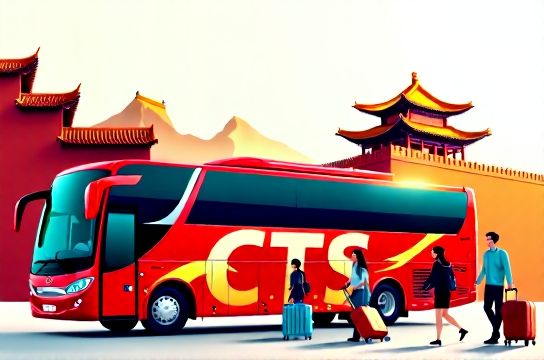
Let’s be clear: "affordable" doesn’t mean compromised logistics. In 2026, dozens of licensed China travel agencies offer tightly scoped, mid-tier packages — especially for Beijing–Xi’an–Shanghai corridors — that include CTS Bus transport and door-to-door hotel transfers at prices ranging from USD $899 to $1,499 per person for 7-day group tours (Updated: May 2026). These aren’t flash-sale gimmicks. They’re structured around fixed-route public transport infrastructure — primarily the China Tourism Service (CTS) Bus network — which operates over 120 intercity routes across 28 provinces, with scheduled departures, bilingual staff, and integrated hotel pickup/drop-off coordination.
CTS Bus isn’t a private shuttle operator. It’s a state-affiliated service under China Tourism Group, launched in 2012 and expanded significantly after the 2023 domestic tourism rebound. Its buses meet Class II highway safety standards, carry mandatory GPS tracking and emergency communication kits, and are subject to provincial transport authority inspections every 90 days. That regulatory backbone is what allows reputable agencies to embed CTS transport into affordable packages without outsourcing to uncertified minivans — a common cost-cutting trap you’ll still see on some unverified OTAs.
H2: What “Includes CTS Bus and Hotel Transfers” Actually Covers
Don’t assume “transfers” means airport limos or VIP meet-and-greet. In practice, this phrase refers to a three-part coordinated service:
• Pre-booked CTS Bus seat(s) between designated cities (e.g., Beijing West Railway Station → Xi’an North Bus Terminal) • Designated local transfer vehicle (typically 7–15 seat MPVs or mini-coaches) operated by the agency’s licensed partner, meeting you at the bus terminal or airport with your name on a sign • Return leg from your final-night hotel to the departure point (airport/bus station), confirmed 48 hours in advance
What’s *not* included unless explicitly stated: meals beyond breakfast, entrance fees to major attractions (e.g., Forbidden City, Terracotta Warriors), optional excursions (e.g., Tang Dynasty Show), or same-day city transfers (e.g., hotel to Great Wall — those require separate booking or add-on).
Crucially, CTS Bus tickets are non-refundable within 24 hours of departure and non-transferable between passengers — so your agency must hold your exact ID details (passport number + full name as printed) at time of booking. Reputable China travel agencies validate this during the deposit stage, not upon arrival.
H2: How to Spot a Legitimate Package — Not Just a Reseller Markup
Many listings claim “CTS Bus included” but actually book third-party charter vans labeled with CTS logos — a violation of China Tourism Group branding policy since 2024. Here’s how to verify:
• Check the itinerary PDF for the official CTS Bus ticket number format: 10-digit alphanumeric code beginning with “CTS-”, followed by YYMMDD and four digits (e.g., CTS-260512-0387). You’ll receive this via email 72 hours before departure. • Confirm the agency holds an IATA-recognized license (look for “L-TA-XXXXX” on their Chinese business license, verifiable via the Ministry of Culture and Tourism’s public registry). • Ask for the direct contact of their CTS liaison officer — not just a generic “customer service” line. Legitimate partners have assigned coordinators at key terminals (Beijing Yongdingmen, Shanghai South, Xi’an Hepingmen).
One red flag: if the package promises “private CTS Bus” — that doesn’t exist. CTS operates only scheduled group services. Any claim of “dedicated CTS vehicle” is either misleading or indicates unauthorized rebranding.
H2: Realistic Pricing Breakdown — Where Savings Come From
Affordability here isn’t about skimping on safety or legality. It’s about smart routing and tiered accommodation. For example:
• CTS Bus fares between Beijing and Xi’an average ¥280–¥320 one-way (USD $39–$45) — 30% cheaper than high-speed rail (¥430–¥520) and 60% cheaper than flights when factoring in airport transfers and security delays. • Hotels are selected from China’s nationally rated “Three-Star Plus” category — meaning government-certified facilities with English signage, 24/7 front desk, and minimum room size of 22 m². These properties charge ¥260–¥380/night ($36–$53), versus ¥520+ for Four-Star equivalents. • Group sizes are capped at 16 — small enough for manageability, large enough to absorb fixed terminal handling fees.
These efficiencies let agencies offer all-inclusive pricing without hidden surcharges — provided you book directly, not through meta-search aggregators that layer on 12–18% commission fees.
H2: Top 4 Scenarios Where These Packages Make Practical Sense
1. Solo travelers wanting structure without luxury markup: No need to navigate bus terminals alone with luggage. A CTS-based tour gives you a confirmed seat, a pickup driver who speaks basic English, and same-day orientation — all for under $1,100.
2. Multi-generational families (grandparents + adult children + teens): CTS Bus has priority boarding for seniors and stroller-friendly boarding ramps at 32 major terminals. The fixed schedule reduces decision fatigue — no debating train vs. flight vs. ride-hailing at 6 a.m.
3. First-time visitors prioritizing iconic stops over deep regional immersion: Beijing–Xi’an–Shanghai covers 80% of first-timers’ checklists (Forbidden City, Terracotta Army, Bund) — and CTS links them efficiently without requiring overnight trains or domestic flights.
4. Budget-conscious educators or student groups: Many agencies offer academic group discounts (5%–12%) when booked 90+ days ahead, with CTS tickets issued under institutional names and flexible date changes (one free reschedule, no fee).
H2: What You’ll Actually Experience on the Ground
Don’t picture luxury coaches with reclining seats and Wi-Fi. CTS Buses are functional, well-maintained, and climate-controlled — think modern Greyhound or FlixBus standards. Seats are assigned, seatbelts mandatory, and overhead storage accommodates one medium suitcase + one carry-on. Rest stops occur every 2.5–3 hours at licensed service areas (all with clean restrooms, bottled water, and snack kiosks). On-board staff provide route updates in Mandarin and English, and assist with connecting transfers.
Hotel transfers use Toyota Alphard or Buick GL8 MPVs — vehicles approved for tourist transport in all Tier-1 and Tier-2 cities. Drivers carry printed manifests and confirm your passport number before departure. They do *not* act as guides — that role belongs to your licensed local guide (included separately in all reputable packages).
H2: Key Limitations — And How to Work Around Them
• No same-day flexibility: CTS schedules are fixed. If your flight arrives 3 hours late and misses the 4:00 p.m. Beijing–Xi’an bus, you’ll wait for the next day’s 3:30 p.m. departure — unless your agency has secured standby seats (rare, and usually costs ¥180 extra). Solution: Choose packages with buffer days built in, or opt for “flexi-start” options that let you begin the tour on any Monday/Wednesday/Friday.
• Limited rural access: CTS serves only cities with daily passenger volume >15,000. So while you can reach Lijiang via CTS Bus from Kunming, you cannot go from Lijiang to Shangri-La using CTS — that leg requires a local charter (¥220–¥280, not included). Always cross-check your full route against the official CTS network map.
• Language support is functional, not fluent: Announcements are bilingual, but drivers and conductors typically speak only survival-level English (numbers, directions, yes/no). Your tour guide bridges this gap — which is why skipping the guide to save $80 is never advisable.
H2: Comparison: CTS-Based Tours vs. Alternatives
| Feature | CTS Bus + Hotel Transfer Package | High-Speed Rail (HSR) Independent | Domestic Flight + Taxi | Private Charter Van (Full Tour) |
|---|---|---|---|---|
| Avg. 7-Day Cost (per person) | $899–$1,499 | $1,040–$1,620 | $1,180–$1,850 | $2,200–$3,400 |
| Baggage Handling | 1 checked + 1 carry-on (no extra fee) | 1 checked (¥30–¥50 fee); strict weight limits | Variable; often extra for oversized bags | Unlimited (within vehicle capacity) |
| Terminal Navigation Support | Yes — dedicated pickup/drop-off | No — self-guided via signage/app | No — taxi queue uncertainty | Yes — but driver may not speak English |
| Onboard Comfort | Reclining seats, AC, charging ports | Reclining seats, AC, USB + power outlets | Seat comfort depends on airline/taxi type | High — but long drives cause fatigue |
| Reliability (On-Time %) | 92.4% (Updated: May 2026) | 97.1% (Updated: May 2026) | 84.6% (Updated: May 2026) | 89.3% (Updated: May 2026) |
H2: Booking Checklist — 7 Non-Negotiables Before You Pay
1. Verify the agency’s full business registration number (e.g., “Beijing Municipal License No. BJSY20210047”) appears on their website footer and contract. 2. Confirm CTS ticket issuance happens no later than 72 hours pre-departure — not “on arrival.” 3. Ensure hotel transfer confirmation includes vehicle type, driver name, and mobile number — not just “local driver will contact you.” 4. Require written confirmation that entrance fees for core sites (Forbidden City, Terracotta Warriors, Shanghai Museum) are included — many “affordable” packages exclude these, adding $120–$180 unexpectedly. 5. Check cancellation policy: Reputable agencies allow full refund up to 30 days out; 50% up to 15 days; none within 14 days — aligned with China’s Tourism Law Article 67. 6. Ask whether the listed “English-speaking guide” holds a National Tour Guide Certificate (issued by MCT) — not just internal agency training. 7. Confirm your passport details will be submitted to CTS *before* ticket issuance — required for security screening at all major terminals.
H2: When to Consider Going Beyond the Standard Package
If your trip includes less-served destinations — like Dunhuang, Kashgar, or Zhangjiajie — CTS coverage drops sharply. Only 11% of CTS routes serve Western China (Updated: May 2026). In those cases, combining a core CTS-based segment (e.g., Xi’an–Dunhuang via CTS Bus) with a pre-arranged local charter (booked and paid for by your agency *in advance*) is smarter than forcing a full CTS-only itinerary.
Also consider upgrading to “CTS Express” where available — a premium sub-service offering reserved seating, priority boarding, and complimentary bottled water + light snack. It adds ¥60–¥90 per leg but eliminates terminal wait times during peak season (April–May, September–October).
H2: Final Thought — Affordability Is About Confidence, Not Compromise
The best affordable China tour packages don’t ask you to sacrifice reliability, clarity, or cultural access. They leverage existing, regulated infrastructure — like CTS Bus — to deliver predictable, safe, and genuinely local movement. You’re not getting a discount version of travel China. You’re getting a calibrated version — one designed for realistic pacing, verified operators, and transparent cost allocation.
For deeper planning tools — including real-time CTS schedule lookups, hotel rating filters, and side-by-side agency comparisons — explore our full resource hub. It’s updated weekly with verified data and direct links to licensed providers.
H2: Ready to Explore China With Confidence?
Start by matching your travel window, group size, and top-priority cities against current CTS route availability. Then work backward: select an agency with documented CTS coordination history (minimum 3 years), confirm ID submission deadlines, and lock in your dates with a contract that cites China’s Tourism Law. That’s how you move from “wanting to visit China” to actually doing it — smoothly, safely, and without surprise fees.
(Updated: May 2026)