
Baotou vs Ordos Inner Mongolia Urban Growth and Grassland Culture Contrasts
- Date:
- Views:190
- Source:The Silk Road Echo
Let’s cut through the noise: Baotou and Ordos aren’t just two cities in Inner Mongolia — they’re living case studies in how resource-driven development shapes urban identity, ecological resilience, and cultural continuity.
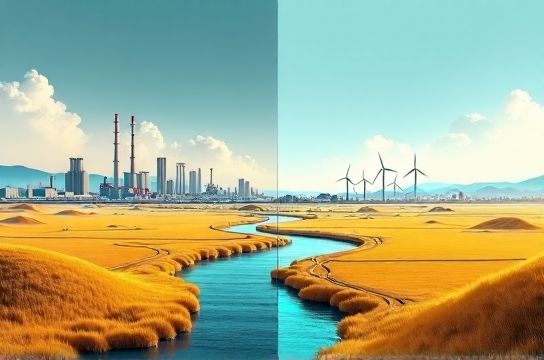
Baotou, China’s ‘Steel Capital’, grew around iron ore and rare earths. In 2023, it produced over 72% of China’s rare earth oxides (USGS data) and contributed ¥285 billion to regional GDP — yet its PM2.5 average stood at 41 µg/m³ (vs. WHO guideline of 5 µg/m³). Meanwhile, Ordos — famed for its ‘ghost city’ myth — has quietly pivoted: since 2018, 68% of new construction complies with China’s Green Building Label Level II+, and its Kangbashi district now hosts 14 eco-parks covering 3,200+ hectares.
Here’s how they compare on key dimensions:
| Metric | Baotou (2023) | Ordos (2023) | National Avg. |
|---|---|---|---|
| GDP per capita (¥) | 128,600 | 192,300 | 89,000 |
| Renewable energy share (%) | 22% | 47% | 31% |
| Grassland coverage change (2010–2023) | −3.2% (net loss) | +1.8% (net gain) | −0.7% |
| Cultural heritage sites protected | 29 | 41 | — |
What’s driving this divergence? Baotou leans into industrial upgrading — its Rare Earth Valley R&D park now hosts 37 national labs. Ordos bets on integration: blending coal-to-hydrogen pilot plants (12 operational as of Q2 2024) with Mongolian language immersion schools and grassland stewardship co-ops involving 11,000 herder households.
Crucially, both cities prove that economic ambition need not erase cultural roots. In fact, Ordos’ annual Nadam Fair draws 300,000+ visitors — up 40% since 2020 — while Baotou’s newly restored Wudangzhao Monastery complex anchors a UNESCO-tentative cultural corridor.
If you're evaluating sustainable urban models in frontier regions, don’t treat them as opposites — treat them as complementary chapters. For deeper insights on balancing growth and tradition, explore our full analysis of Inner Mongolia’s urban evolution.