
Guangzhou vs Nanjing Food Culture and Historical Depth Compared for Travelers
- Date:
- Views:229
- Source:The Silk Road Echo
Let’s cut through the noise: if you’re planning a food-focused trip to China, Guangzhou and Nanjing aren’t just ‘two cities with dumplings’ — they’re living textbooks of imperial legacy, trade history, and regional philosophy on the plate.
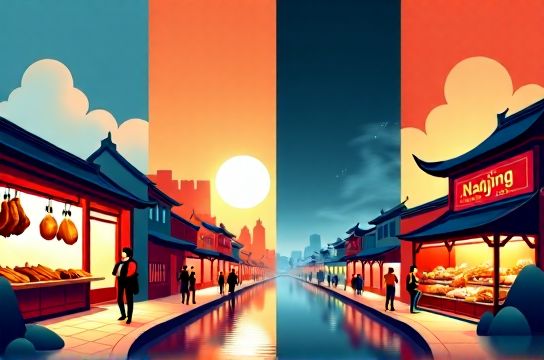
Guangzhou, the southern gateway since the Han Dynasty (206 BCE–220 CE), absorbed flavors via the Maritime Silk Road. Its cuisine — Cantonese — prioritizes freshness, subtle seasoning, and *wok hei* (the ‘breath of the wok’). Over 70% of Michelin-recognized Chinese restaurants outside China trace roots to Guangzhou-trained chefs (Michelin Guide Asia 2023 Report).
Nanjing, capital of six dynasties and home to the Ming-era imperial palace ruins, developed a more layered, preservation-influenced palate — think salted duck, osmanthus-scented glutinous rice cakes, and slow-braised lion’s head meatballs. Its food reflects northern-southern fusion and wartime ingenuity: during the Ming-Qing transition, locals perfected air-drying and brining to preserve protein year-round.
Here’s how they compare across key dimensions:
| Criterion | Guangzhou | Nanjing |
|---|---|---|
| Oldest documented dish | Steamed fish with ginger & scallion (c. 1100 CE, Song Dynasty records) | Nanjing salted duck (c. 1370 CE, Ming court archives) |
| UNESCO recognition | Cantonese cuisine — Intangible Cultural Heritage (2022, Guangdong Province) | Nanjing’s culinary traditions — Provincial ICH (2020); pending national review |
| Avg. daily street food spend (2024, local surveys) | ¥28–¥42 | ¥22–¥36 |
One practical tip: Guangzhou shines for breakfast — dim sum isn’t just food; it’s a social ritual with over 2,000 documented varieties. Nanjing excels in seasonal snacks: try *guihua gao* (osmanthus cake) in autumn or *shengjian bao* (pan-fried buns) at Xiaolingwei Market — where vendors have operated since 1958.
Historically, Guangzhou’s openness bred adaptability; Nanjing’s repeated rises and falls forged resilience — and that shows up on your plate. Neither is ‘better’. But if you want to understand how geography, governance, and gastronomy intertwine in China, start with a bowl of Guangzhou wonton noodles — then hop a 3.5-hour high-speed train north for Nanjing’s duck-liver vermicelli. That contrast? That’s the story of China — one bite at a time.