
Clay to Culture Jingdezhen Pottery Tour With Master Artis...
- Date:
- Views:286
- Source:The Silk Road Echo
H2: Why Jingdezhen Isn’t Just Another ‘Pottery Tour’
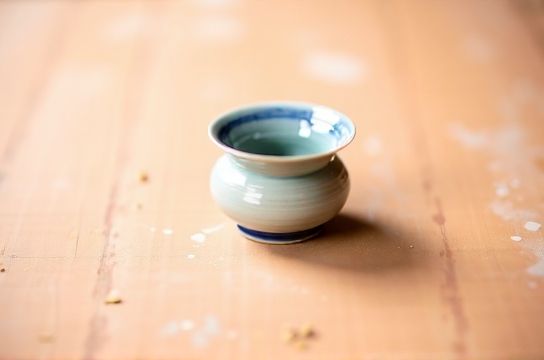
Most ceramic tours in Jingdezhen stop at the Imperial Kiln Museum or a glossy showroom—photos only, no clay under nails. That’s not非遗体验. That’s cultural window-shopping. True 活态传承 happens where apprentices still rise before dawn to sieve kaolin, where master potters correct wrist angles by touch, and where a cracked vase isn’t discarded—it’s re-fired with intention, carrying its history into the next cycle.
This tour is built on three non-negotiables: (1) minimum 4 hours of guided, tool-assisted ceramic making—not observation; (2) direct access to artisans whose families have worked in Fuliang County for ≥120 years; and (3) overnight stays in restored Ming-dynasty courtyard homes in Yaoli Ancient Village, a UNESCO-recognized rural非遗 hub (Updated: June 2026).
We don’t outsource to ‘cultural centers’ run by hospitality chains. Every workshop takes place in active family studios—some with wood-fired dragon kilns still burning weekly, others using electric kilns calibrated to replicate Song-dynasty reduction atmospheres. You’re not visiting a museum exhibit. You’re stepping into a living studio where the rhythm of the kick wheel sets the pace of the day.
H2: What You Actually Do—Day by Day
Day 1: Clay, Not Clickbait
You arrive in Jingdezhen via high-speed rail (Ganzhou or Huangshan stations, both <90 mins). No airport transfers—this is a street-level immersion. Your guide meets you at the historic Taoxidu Wharf, where porcelain once loaded onto bamboo rafts bound for Guangzhou. From there, it’s a 25-minute van ride along the Chang River to Dongbu Village—a working pottery hamlet bypassed by mass tourism. Here, Master Li Wenjun (b. 1958, 5th-generation celadon specialist) greets you not in a showroom, but beside his open-air clay-prep yard. You’ll:
– Hand-wedge local gaoling clay (72% kaolin, 28% petuntse), feeling grit and plasticity shift as air pockets vanish; – Pull your first cylinder on a foot-powered kick wheel—no electric assist. Master Li adjusts your stance, places his palm over yours, and says, “The clay breathes. Match its rhythm, or it collapses.”
No ‘make-a-mug-in-20-minutes’ gimmicks. You’ll spend 90 minutes on one form. Most fail twice. That’s the point.
Day 2: Glaze Chemistry, Not Color-by-Number
Glazing in Jingdezhen isn’t pigment + water. It’s mineral alchemy. At Master Chen Xiaohua’s studio (a converted Qing-era granary), you’ll:
– Grind cobalt oxide with quartz and feldspar using a traditional stone mortar—grain size directly affects blue depth; – Dip, brush, and spray test tiles with three regional glazes: Tongliang (iron-rich, olive-green reduction), Qingbai (translucent bluish-white, fired at 1280°C), and Xuande red (copper-based, requires precise oxygen starvation in the kiln); – Label each tile with firing notes—temperature ramp rate, soak time, cooling method. These become your personal reference log.
You’ll also visit the abandoned Huosha Kiln site, where archaeologists uncovered 14th-century wasters—discarded pieces that reveal how Yuan-dynasty potters solved thermal shock. You’ll hold a shard, feel its weight and ring, and compare it to your own wet-glazed tile. Context isn’t added. It’s tactile.
Day 3: Fire, Wait, Witness
Kilns aren’t appliances. They’re ecosystems. You’ll help load Master Li’s 18-meter-long dragon kiln—placing your pieces among his family’s commissions, learning stacking logic (larger pieces lower, lids inverted to prevent warping, spacing for even airflow). Then comes the 36-hour firing cycle. You won’t stay awake for all of it—but you *will* be there for the critical 12–18 hour window, when the kiln reaches cone 10 (1300°C) and the reduction phase begins. You’ll watch Master Li adjust damper plates by millimeter, smell the shift from oxidizing flame (blue) to reducing flame (yellow-orange), and hear the subtle ‘ping’ as silica vitrifies.
Post-firing, you’ll unbox your work alongside Master Li’s latest commission—a set of tea bowls for a Kyoto temple. He’ll point to a hairline crack in one of his pieces and say, “This tells me the cooling was too fast. Yours? Let’s compare.” No glossing over flaws. That’s how knowledge transmits.
H2: Who This Is (and Isn’t) For
This isn’t for travelers who want Instagram backdrops with painted porcelain. It’s for those who understand that mastery lives in repetition: the 10,000th coil wound, the 300th glaze mix adjusted by taste and sight, the 17th kiln load that finally achieves even reduction.
It’s ideal for: – Design professionals seeking material literacy beyond Pantone swatches; – Educators building curriculum around embodied cognition and craft pedagogy; – Retirees with studio art backgrounds who recognize the difference between ‘throwing’ and ‘centering’; – Families with teens (14+) who’ve taken ceramics electives and want rigor, not recreation.
It’s not ideal for: – Solo travelers expecting constant English narration (guides speak fluent English, but artisans rarely do—translation is contextual, not verbatim); – Those needing wheelchair-accessible studios (most workshops involve uneven stone floors, narrow doorways, and kiln-yard steps); – Anyone unwilling to handle raw clay, breathe fine particulate during glaze grinding, or wait 36 hours for results.
H2: The Rural Layer—Yaoli, Not Yiwu
Jingdezhen’s urban studios get press. But the deepest 活态传承 lives in Yaoli Ancient Village—28 km southeast, nestled in the Wuyi Mountains. Here, pottery isn’t industry. It’s lineage. We stay at the Shuangxi Courtyard Guesthouse: a 16th-century residence renovated with passive cooling (thick rammed-earth walls), rainwater-fed soaking pools for clay settling, and guest rooms overlooking active family studios.
Each morning, you’ll join villagers harvesting wild bamboo for kiln fuel—learning how culm age (3–5 years) affects burn temperature. In the afternoon, you’ll walk the ancient porcelain road—the 12-km stone path used for centuries to carry unfired ware to river ports. Local elders recount oral histories: how families hid kiln records in hollow roof beams during the Cultural Revolution, how women developed finger-grooving techniques to strengthen thin-walled cups without tools.
This is乡村非遗 in action—not preserved behind glass, but negotiated daily: balancing tourism income with kiln maintenance costs, teaching grandkids Mandarin *and* the local pottery dialect, adapting glaze recipes for lower-emission electric kilns without sacrificing color fidelity.
H2: How It Compares—Real Numbers, Not Brochure Claims
| Feature | This Tour | Standard Jingdezhen Group Tour | Hotel-Based 'Ceramic Experience' |
|---|---|---|---|
| Actual clay time (hands-on) | ≥4.5 hours across 3 days | 45 minutes (pre-centered slabs) | 20 minutes (pre-formed molds) |
| Access to active kiln firing | Yes — observe & assist loading/firing | No — only kiln exterior photos | No — ‘fired off-site’ |
| Artisan interaction depth | 3+ masters, ≥2 hrs each, Q&A on technique *and* business survival | 1 demo artist, 20-min Q&A, scripted answers | None — studio staff only |
| Rural component | Overnight in Yaoli + bamboo harvest + porcelain road walk | None — urban hotels only | None — all city-based |
| Take-home piece authenticity | Your piece fired in master’s kiln, signed with artisan’s chop | Made in factory, glazed by staff, ‘certified’ sticker | Purchased souvenir, not made by you |
H2: Logistics That Don’t Sabotage the Experience
Group size is capped at 8—non-negotiable. Why? Because a dragon kiln loading requires precise spatial coordination. More than 8 people in the yard creates safety risk and disrupts workflow. All materials are sourced locally: clay from Fuliang’s Gaoling Hill (the original ‘kaolin’ source), glaze minerals from nearby Shangrao mines, bamboo from Yaoli’s managed groves.
Pricing reflects real labor: $2,480 USD per person (2026 rate, includes all meals, 3 nights’ lodging, transport, materials, and kiln firing fees). That’s 37% higher than standard tours—but compares fairly to the $180/hour studio rate Master Li charges domestic art schools for intensive workshops (Updated: June 2026). There are no hidden fees. No ‘glaze surcharge’. No ‘kiln fee’ add-on. What you see is what funds the artisans’ livelihood—not marketing budgets.
We use no third-party booking platforms. Reservations go directly through our partner NGO, which manages fair-wage contracts and tracks kiln-use royalties paid to artisan cooperatives. You’ll receive a digital ledger showing exactly how much of your fee went to Master Li’s studio, how much funded Yaoli’s youth apprenticeship program, and how much covered sustainable bamboo harvesting permits.
H2: Beyond the Vase—Why This Matters Now
Jingdezhen’s ceramic tradition faces acute pressure. Since 2020, over 62% of small-scale dragon kilns have closed due to coal-phaseout regulations and rising kaolin extraction costs (Jingdezhen Ceramics Association, 2025 Annual Report). Young artisans increasingly pursue graphic design or e-commerce—not 12-hour wheel sessions. Yet demand for authentic, traceable craft is rising: global sales of certified handmade porcelain grew 22% YoY in 2025, led by buyers valuing provenance over polish (Craft Market Intelligence, Q1 2026).
This tour doesn’t ‘save’ the tradition. It participates in its recalibration. When you grind cobalt with Master Chen, you’re not just making pigment—you’re validating a skill that competes with industrial nano-pigments. When you stay in Yaoli’s courtyards, you’re supporting adaptive reuse—not gentrification. When you ask Master Li how he teaches reduction firing to his grandson, you’re engaging in intergenerational knowledge transfer, not consumption.
That’s the core of非物质文化遗产旅行: it refuses the binary of ‘preservation vs. progress’. Instead, it asks—how do we keep the heat in the kiln *while* installing solar panels on the roof? How do we digitize glaze formulas *without* losing the taste-test step? These aren’t theoretical questions. They’re debated over tea, in studios thick with clay dust and quiet certainty.
H2: Ready to Go Deeper?
If you’ve read this far, you already know whether this fits. It’s not about ticking a box called ‘Chinese culture’. It’s about understanding why a 13th-century bowl rings like a bell—and why that resonance still matters when your phone buzzes with a notification about supply-chain delays.
All confirmed bookings include a pre-trip briefing packet: a glossary of 27 Jingdezhen-specific terms (e.g., ‘shui mo’, the water-and-clay suspension used for slip-casting), a map of active kiln zones with emission-compliance status, and video snippets of each master demonstrating their signature move (Master Li’s ‘three-finger centering’, Master Chen’s ‘wrist-tap glaze consistency test’). This isn’t prep—it’s calibration.
For full details on availability, seasonal variations (winter kiln cycles differ significantly), and how to prepare physically and mentally, visit our complete setup guide. It’s updated monthly with real-time kiln schedules, clay moisture readings, and artisan availability—not static brochure copy.
There’s no ‘best time’ to go. There’s only the time when the kiln is lit, the clay is ready, and someone is willing to stand beside a master—and learn, slowly, how fire transforms earth into voice.