
Embroidery Heritage Journey Through Suzhou and Hunan Vill...
- Date:
- Views:194
- Source:The Silk Road Echo
Hunched over a silk frame in a sunlit studio just outside Pingjiang Road, 78-year-old Master Chen adjusts her magnifying lens, needle hovering mid-stitch above a translucent peony petal. Her fingers—knotted, steady—don’t tremble. She’s been embroidering *shuangmian xiu* (double-sided embroidery) since 1953. No digital pattern, no pre-printed template: just charcoal sketch, raw silk, and 12 strands of hand-dyed silk floss split down to a single filament. This isn’t performance. It’s continuity.
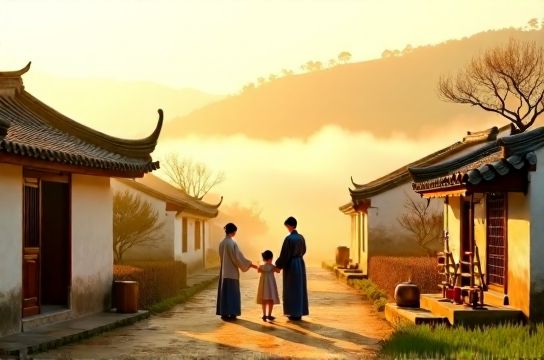
That moment—quiet, unscripted, deeply human—is the heartbeat of intangible cultural heritage travel. Not the curated museum display or the 90-second TikTok clip, but the slow, tactile rhythm of craft sustained across generations in working studios tucked into Suzhou’s canal-side alleys and Hunan’s mist-wrapped Miao villages. This journey isn’t about ticking UNESCO lists. It’s about showing up—with clean hands, open questions, and willingness to mis-stitch—and being welcomed into the daily practice of living tradition.
Why Embroidery? Why Now?
Embroidery sits at a rare intersection: technically demanding enough to resist commodification, socially embedded enough to anchor community identity, and visually legible enough to invite immediate engagement. Unlike ceramics or woodblock printing—which require kilns or presses—embroidery needs only thread, fabric, needle, and time. That portability makes it ideal for village-based transmission. In Suzhou, *Su xiu* has been inscribed on China’s National Intangible Cultural Heritage List since 2006; in Hunan’s Xiangxi Prefecture, Miao embroidery (*Miao xiu*) was added in 2006 and recognized by UNESCO as part of the broader ‘Chinese Embroidery’ dossier in 2018 (Updated: June 2026).But recognition alone doesn’t sustain practice. What does? Three things: intergenerational teaching infrastructure, market viability beyond souvenir shops, and spatial access—physical studios where outsiders can observe, ask, and try—not just watch from behind velvet rope. Suzhou and Hunan deliver all three—but differently.
Suzhou: Precision, Patronage, and the Canal-Side Studio Ecosystem
Suzhou’s embroidery tradition is inseparable from its geography: water, silk, and scholarly refinement. For centuries, the city supplied imperial courts with *Su xiu*, prized for its ‘flat, smooth, even, bright, delicate, and harmonious’ qualities—six criteria still taught verbatim in master-apprentice training. Today, fewer than 42 certified *Su xiu* inheritors remain, per Jiangsu Provincial ICH Office data (Updated: June 2026). Most operate not from institutional ateliers, but from family-run studios along Shantang Street or within restored Ming-era courtyard homes near Panmen Gate.The most accessible entry point isn’t the Suzhou Embroidery Research Institute (which hosts rotating exhibitions but limits hands-on access), but the Shuangqiao Embroidery Cooperative, founded in 1957 and restructured as a cooperative in 2012. Here, visitors book half-day workshops led by second- or third-generation practitioners—many trained directly under national-level inheritors like Zhou Huijun. You don’t start with peonies. You start with *jiaoshi* (‘stitching the base’): mastering the ‘even stitch’ on plain cotton, then progressing to silk organza, then learning how to split threads without cutting them—a skill that takes six weeks of daily practice to internalize.
What sets Suzhou apart is its ecosystem integration. A workshop may include:
- A 45-minute dialogue with a master on color theory—why indigo-dyed silk absorbs light differently than chemical-dyed thread, affecting luminosity;
- Observation of ‘shadow stitching’—where identical motifs appear flawlessly on both sides of sheer silk, requiring zero knots or backstitches;
- A visit to the nearby Suzhou Silk Museum to contextualize fiber sourcing, but crucially—no forced ‘silk farm tour’. The focus stays on the needle, not the cocoon.
This isn’t ‘cultural tourism’ as spectacle. It’s apprenticeship-lite: structured, respectful, low-pressure. Mistakes are expected. One participant last spring stitched a sparrow’s wing backward—Master Chen laughed, unpicked three stitches, and said, ‘Good. Now you know where the tension lives.’
Hunan’s Xiangxi: Miao Embroidery as Language, Memory, and Resistance
Drive two hours west from Changde into the mountains of Xiangxi Tujia and Miao Autonomous Prefecture, and the aesthetic shifts entirely. Here, embroidery isn’t about optical perfection—it’s mnemonic coding. Every zigzag represents mountain ridges; red triangles signify fire and ancestral protection; blue-dyed hemp cloth carries indigo’s antimicrobial legacy—and its symbolic link to resilience.Miao embroidery has no centralized academy. Transmission happens in courtyards, during wedding preparations, or while tending livestock. Since 2019, however, village-level cooperatives—supported by Hunan’s Department of Culture and Tourism and grassroots NGOs like Miao Threads Collective—have formalized weekend workshops in Jishou, Fenghuang, and the remote village of Dexiu. These aren’t ‘craft days’. They’re multi-generational gatherings: grandmothers demonstrate *biantou xiu* (‘border embroidery’) on baby carriers; teenage girls practice geometric patterns using traditional wooden frame looms; local historians explain how specific motifs were altered during periods of migration to encode safe passage routes.
The material reality is stark: synthetic dyes now dominate due to cost and speed, but cooperatives maintain small-scale indigo vats fed by wild polygonum leaves harvested each August. Participants grind leaves, ferment paste, and dip hemp cloth—then watch the oxidation turn pale yellow to deep cobalt over 24 hours. It’s chemistry, ecology, and ritual fused.
Unlike Suzhou’s emphasis on individual mastery, Xiangxi workshops stress collective authorship. A single ceremonial jacket may involve 12 women across three villages—each contributing one panel, signed not with names, but with motif variations unique to their lineage. When you embroider here, you’re not making ‘a piece’. You’re adding a thread to an ongoing sentence.
From Observation to Participation: What a Real Workshop Looks Like
Let’s be clear: not all ‘非遗工作坊’ deliver equal depth. Some rotate guests through stations—cutting paper, stirring clay, strumming a pipa—for 20 minutes each. That’s exposure, not immersion. True intangible cultural heritage travel demands sustained contact, language-aware facilitation (English-speaking translators embedded in studios, not outsourced), and consent-based documentation policies.Below is a comparison of two verified, traveler-reviewed workshop models operating in 2024–2026. All meet minimum standards: minimum 3-hour duration, maximum 8 participants, certified inheritor or direct lineage practitioner leading, and post-session reflection time built in.
| Feature | Suzhou Shuangqiao Cooperative (Su xiu) | Xiangxi Dexiu Village Cooperative (Miao xiu) |
|---|---|---|
| Duration & Structure | Half-day (3.5 hrs): 45-min intro + 90-min guided stitching + 45-min Q&A + 30-min reflection/journaling | Full day (6 hrs): 60-min motif storytelling + 120-min indigo vat prep + 90-min embroidery on hemp + 30-min communal tea & oral history sharing |
| Max Group Size | 6 | 8 |
| Lead Practitioner | National-level inheritor apprentice (certified by Jiangsu ICH Bureau) | Village elder + certified Miao cultural mediator (trained by Hunan ICH Center) |
| Materials Included | Silk organza, hand-dyed floss (12 colors), magnifier, traditional bamboo frame | Hand-woven hemp cloth, natural indigo paste, cotton thread, wooden embroidery frame |
| Pricing (2024–2026) | ¥480/person (includes ¥60 donation to Suzhou ICH Youth Training Fund) | ¥320/person (includes ¥40 contribution to village indigo seed bank) |
| Key Limitation | Requires advance booking (min. 21 days); no walk-ins. English translation provided, but technical terms retain Chinese nomenclature (e.g., ‘yunjin’ for cloud-gold stitch). | Seasonally restricted: workshops run April–October only (indigo harvest window). No English fluency among elders—mediator essential. |
The Unspoken Rules of Ethical Engagement
Intangible cultural heritage travel carries responsibility—not just logistical, but ethical. Here’s what experienced guides and inheritors consistently emphasize:Don’t photograph first. Ask later—and mean it. In Dexiu, elders declined photo requests until participants completed a shared meal and exchanged handwritten notes in Mandarin. One grandmother handed a visitor a folded square of embroidered cloth saying, ‘This is my daughter’s wedding cloth. You hold it. Then we talk.’
Compensation isn’t transactional—it’s relational. Pay workshop fees directly to the cooperative (not a third-party agent). Tip in cash, yes—but also bring school supplies for village children, or donate archival-quality acid-free paper for documenting oral histories. Suzhou’s cooperatives request no branded merchandise; instead, they welcome donations of UV-filtering display cases for aging masterworks.
Leave room for silence. Not every story is meant for export. When Master Chen paused mid-explanation of ‘floating stitch’ technique and gazed out the window at willow branches stirring on the canal, no one rushed to fill the space. That silence held more pedagogy than any lecture.
Beyond Embroidery: Weaving the Wider Intangible Fabric
Embroidery rarely exists in isolation. In Suzhou, your studio visit naturally extends to a late-afternoon Suzhou pingtan (story-singing) session at a teahouse in Pingjiang Historic District—where performers use pipa and sanxian to narrate classical tales, their vocal ornamentation echoing embroidery’s rhythmic precision. In Xiangxi, embroidery workshops often conclude with a walk to a nearby lusheng (reed pipe) maker’s shed, where bamboo selection, curing, and tuning follow seasonal lunar calendars unchanged for 300 years.These connections matter. They prevent ‘非遗体验’ from becoming a fragmented checklist—‘did’ embroidery, ‘did’ shadow puppetry, ‘did’ ceramic throwing—and instead reveal how intangible heritage functions as an integrated system: textile patterns inform musical phrasing; agricultural cycles dictate dye harvesting; oral epics preserve botanical knowledge used in mordants.
That’s why the most resonant moments often happen off-schedule: watching a Miao silver-smith in Fenghuang adjust his charcoal brazier while humming a lullaby passed down from his great-grandmother; seeing a Suzhou woodblock printer align inked pearwood blocks by eye alone, referencing a 19th-century manual held together with rice paste and patience.
Planning Your Journey: Practicalities That Matter
Forget ‘best time to visit’. Focus instead on alignment: when do your interests sync with actual practice cycles?- Suzhou: Optimal months are March–May and September–October. Avoid July–August (extreme heat disrupts silk tension) and December–January (low humidity causes thread brittleness). Book workshops via the full resource hub, which verifies studio certifications and updates translator availability weekly.
- Xiangxi: Attend during the Miao New Year (late October–early November) for ceremonial embroidery demonstrations—or target early August for indigo harvest. Rural transport remains challenging: hire a local driver fluent in Xianghua dialect (standard Mandarin isn’t widely spoken in remote villages).
Accommodation matters too. In Suzhou, stay in a renovated shikumen residence with shared courtyard space—many host informal evening brush-calligraphy sessions led by retired teachers. In Xiangxi, choose homestays vetted by the Miao Threads Collective; avoid large resorts that import non-local crafts for ‘cultural nights’.
Finally: bring nothing flashy. No Bluetooth speakers, no selfie sticks, no ‘authenticity’ expectations. Bring sharp scissors (for thread-cutting), a small notebook with blank pages (no lined paper—too rigid for sketching motifs), and willingness to sit still for longer than feels comfortable.
Not an Endpoint—A Thread to Pull
You won’t leave Suzhou or Xiangxi ‘finished’. You’ll leave with a small embroidered square—slightly crooked, uneven in tension, radiant in intention. You’ll leave with a voice memo of a Miao elder singing a creation myth, recorded not for social media, but for your own listening on rainy evenings. You’ll leave knowing that ‘活态传承’ isn’t a slogan. It’s the sound of a needle pulling silk, the smell of fermenting indigo, the weight of a wooden frame against your thigh.And if you listen closely—past the tour-group chatter, past the drone footage, past even your own assumptions—you’ll hear something older: the quiet, persistent hum of culture choosing, daily, to continue.