
Master the Art of Chinese Paper Cutting in a Village Studio
- Date:
- Views:380
- Source:The Silk Road Echo
If you've ever flipped through a travel blog or binged a cultural doc, you’ve probably seen those intricate red paper cutouts—delicate dragons, blooming peonies, or festive Chinese paper cutting symbols adorning windows during Lunar New Year. But did you know you can actually learn this 1,500-year-old art form from master artisans—in a quiet village studio, far from tourist traps?
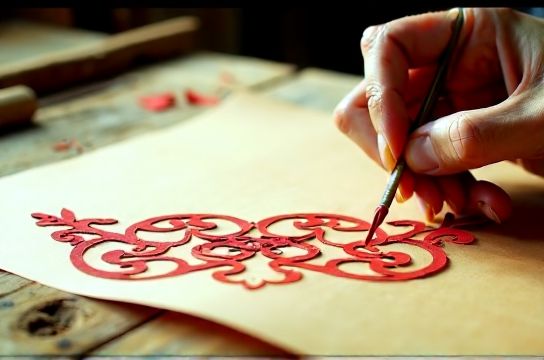
I recently spent a week in Shanzao Village, Shaanxi Province—one of China’s recognized heritage hubs for paper cutting traditions. What I discovered wasn’t just craft—it was storytelling with scissors.
Why Learn From a Village Studio?
Big-city workshops often simplify designs for tourists. But in villages like Shanzao, masters pass down techniques through generations. According to UNESCO, over 70% of authentic Chinese paper-cutting skills are preserved in rural households, mostly by women over 60. These aren't just craftspeople—they're living cultural inheritors.
Here’s a quick comparison:
| Feature | Village Studio | Urban Workshop |
|---|---|---|
| Instruction Depth | 4–6 hours, multi-design mastery | 1–2 hours, single basic pattern |
| Teacher Background | Heritage-level artisan (avg. 30+ yrs exp) | Trained instructor (avg. 3–5 yrs) |
| Authenticity of Design | Traditional regional motifs | Modernized or generic shapes |
| Class Size | 2–5 students | 10–20 students |
| Cost (per session) | ¥80–120 (~$11–17) | ¥200–400 (~$28–56) |
Yep—you get more authenticity for less cash. And your money supports local elders keeping the craft alive.
What You’ll Actually Learn
A full beginner-to-intermediate course covers:
- Folding techniques (symmetry is key!)
- Tool handling: Small, sharp scissors vs. knives
- Classic motifs: 'Fu' (blessing), fish (abundance), phoenixes
- Freehand cutting vs. stencil tracing
By day three, I could cut a decent double-happiness symbol without tearing the paper—huge win.
How to Find the Right Studio
Not all village classes are equal. Look for:
- Recognition by local cultural bureaus
- Photos of student work featuring complex patterns
- In-person demos (not just video tutorials)
I recommend studios registered under the Intangible Cultural Heritage Protection Program. These teachers undergo official training and curriculum standards.
Pro tip: Visit between November and February. That’s when demand spikes for New Year decorations, so masters are actively teaching—and you’ll absorb real seasonal context.
Final Thoughts
Learning Chinese paper cutting in a village studio isn’t just a class—it’s cultural immersion with scissors. You walk away with skills, stories, and a deeper respect for an art that predates print itself.
So skip the mall workshop. Head to the countryside. Let a grandmother teach you how to fold fate into paper.