
Discovering Hakka Villages in Mountainous Fujian
- Date:
- Views:244
- Source:The Silk Road Echo
If you're looking for a truly authentic slice of Chinese culture, skip the crowded tourist traps and head straight to the Hakka villages in mountainous Fujian. As someone who’s explored rural China for over a decade, I can tell you—these hidden gems offer more than just scenic views. They’re living museums of tradition, architecture, and community.
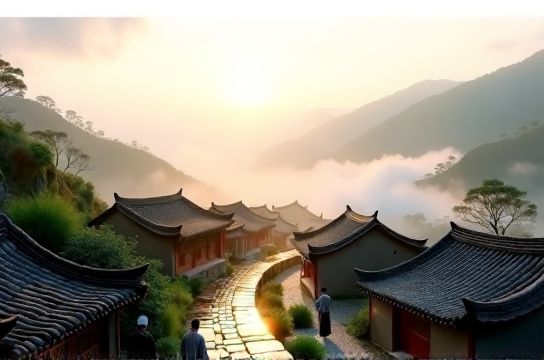
The Hakka people, a distinct Han Chinese subgroup, built their lives around resilience. Centuries ago, they migrated south to escape conflict, settling in remote areas like Fujian’s lush hills. Their answer to safety and solidarity? The legendary tulou—massive, fortress-like earthen buildings that still stand today. And trust me, seeing one in person is unlike anything you’ll experience in a city museum.
Let’s talk numbers. UNESCO lists 46 Fujian tulou sites as World Heritage, with most concentrated in Yongding and Nanjing counties. These structures can house up to 80 families—over 800 people—under one roof. Yep, one roof. Circular, three to five stories high, made from pounded earth, wood, and stone. Some are over 1,000 years old and still inhabited.
Top 3 Hakka Tulou Clusters You Can’t Miss
| Cluster Name | Location | Key Feature | UNESCO Listed |
|---|---|---|---|
| Chengqi Lou | Yongding County | Largest tulou, "King of Tulou" | Yes |
| Zhencheng Lou | Yongding County | Romanesque interior, two circular rings | Yes |
| Tianluokeng | Nanjing County | Famous "four dishes, one soup" layout | Yes |
Now, why should you visit now? Overtourism hasn’t hit these regions hard—yet. While places like Guilin or Zhangjiajie overflow with tour buses, many Fujian Hakka villages remain peaceful, with locals welcoming travelers into family-run guesthouses. A night in a tulou costs as little as $25 USD, including home-cooked meals featuring pickled vegetables, braised pork, and Hakka rice wine.
But here’s the insider tip: go between March and May. The weather’s mild, tea fields are being harvested, and spring festivals bring traditional music and lion dances. Avoid Golden Week (October)—it gets packed.
Cultural preservation is real here. Many younger Hakka return during holidays to maintain ancestral homes. In Zhencheng Lou, I met a retired teacher who gave free history tours in broken but passionate English. That kind of connection? Priceless.
In short, if you crave depth over dazzle, the Hakka villages of Fujian deliver. It’s not just travel—it’s understanding. And once you walk through that thick wooden gate into a centuries-old courtyard, hearing laughter echo off ancient walls, you’ll get it.