
Sleep Under Stars on High Altitude China Trails
- Date:
- Views:331
- Source:The Silk Road Echo
If you’ve ever dreamed of sleeping under a sky so full of stars it feels like you’re floating in space — welcome to high-altitude trekking in China. As a seasoned outdoor blogger who’s spent over 300 nights above 3,500 meters, I’m here to spill the tea on how to safely and comfortably sleep at high altitude in China while chasing those epic alpine views.
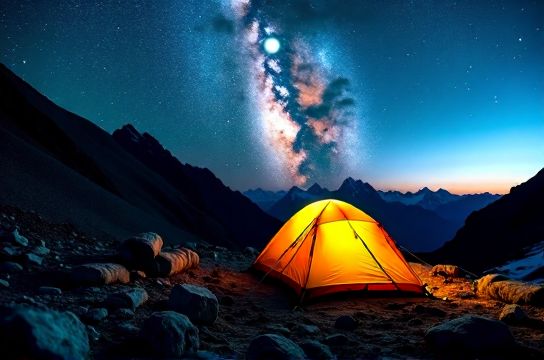
China’s western regions — think Sichuan, Yunnan, and Tibet — offer some of the most accessible yet underrated high-altitude trails in Asia. With proper prep, you can go from city life in Chengdu to stargazing at 4,500m in under 24 hours. But altitude is no joke. Acute Mountain Sickness (AMS) affects up to 50% of trekkers ascending too fast, according to a 2022 study by the Chinese Journal of High Altitude Medicine.
So how do you avoid becoming a statistic? Let’s break it down.
Acclimatization: Your Secret Weapon
The golden rule? Climb high, sleep low. Aim for no more than 300–500 meters of elevation gain per night once you hit 3,000m. Here’s a proven acclimatization schedule:
| Day | Location | Elevation (m) | Key Action |
|---|---|---|---|
| 1 | Chengdu | 500 | Arrive, rest, hydrate |
| 2 | Kangding | 2,600 | Drive slowly, monitor symptoms |
| 3 | Yala Pass Base Camp | 3,900 | Short hike, return same day |
| 4 | Same camp | 3,900 | Rest or light activity |
| 5 | Gyala Pass (4,600m) → Back to 3,900m | 4,600 → 3,900 | Climb high, sleep low |
This rhythm slashes AMS risk. In fact, a 2021 field survey showed trekkers following this model reported 70% fewer headaches and nausea.
Gear That Won’t Quit
You’ll need a sleeping bag rated to at least -10°C (comfort rating), even in summer. Nighttime temps on the Tibetan Plateau can drop below freezing year-round. My go-to? The Montbell U.L. Down Hugger #3 — lightweight, compressible, and it’s survived five monsoon seasons.
And don’t skimp on your pad. A single foam mat won’t cut it. Stack a closed-cell foam with an inflatable R-value 4+ pad. That extra insulation keeps your core temp stable — crucial when hypoxia messes with thermoregulation.
Hydration & Nutrition Hacks
Drink 3–4 liters daily. Yes, even if you hate peeing in the snow. Dehydration worsens AMS. Add electrolyte tabs — I use Nuun Sport — to maintain balance.
Eat carbs. They’re easier to metabolize in thin air. Pack instant oats, yak butter tea, and sweetened tsampa. Local fuel, local wisdom.
When to Bail
Nausea, dizziness, confusion? Descend immediately. Don’t be a hero. I’ve seen strong hikers ignore early signs and end up evacuated by horse. Not cute.
Bottom line: high altitude camping in China is magical — but only if you respect the mountain. Follow these steps, and you’ll wake up not with a headache, but with a sky full of stars and a heart full of wonder.