
China Rural Travel to Remote Cultural Destinations
- Date:
- Views:207
- Source:The Silk Road Echo
Thinking about escaping the city chaos and diving into something real? Welcome to rural China — where ancient traditions breathe through misty mountains, terraced fields stretch like stairways to heaven, and village elders still tell stories passed down for centuries. This isn’t your typical tourist trail; it’s a journey into the soul of Chinese culture.
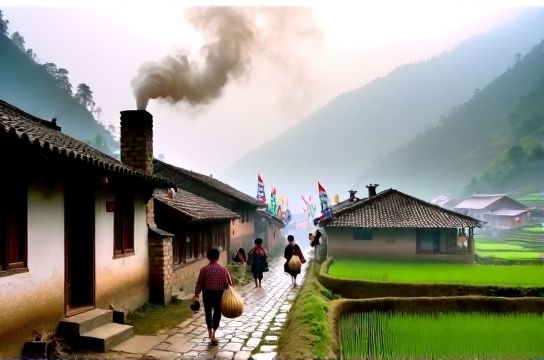
Why Go Off the Beaten Path?
While millions flock to the Great Wall or Zhangjiajie, fewer than 5% of international travelers venture into China’s remote countryside. Yet, these hidden corners hold the richest cultural gems: Dong minority drum towers, Tibetan prayer flags fluttering above alpine valleys, and Hakka tulou — giant earthen fortresses that look like something out of a fantasy novel.
The best part? You’re not just observing culture — you’re living it. Share a homemade meal with a Miao family in Guizhou, learn paper-cutting from a local artisan in Shaanxi, or join a harvest festival in Yunnan. These aren’t performances. They’re everyday life.
Top 4 Must-Visit Rural Destinations
| Destination | Province | Cultural Highlight | Best Time to Visit |
|---|---|---|---|
| Xianfeng Village | Hubei | Tujia stilt houses & folk songs | Sept–Nov |
| Shangri-La (Napa Valley) | Yunnan | Tibetan monasteries & nomadic life | May–Oct |
| Fenghuang Ancient Town | Hunan | Miao & Tujia silverwork & festivals | Spring & Autumn |
| Chikan Town | Guangdong | Overseas Chinese heritage & watchtowers | Oct–Dec |
Each place offers a different flavor of authenticity. Want drama? Head to Shangri-La, where海拔 (altitude) hits 3,300 meters and the air feels sacred. Prefer charm? Stroll Fenghuang’s cobbled lanes, lit by red lanterns reflecting on the Tuo River.
How to Travel Responsibly
Let’s be real — tourism can hurt as much as help. But with a little mindfulness, you can leave a positive footprint. Here’s how:
- Stay local: Book homestays instead of chains. In Xianfeng, a night with a Tujia family costs around ¥150 (~$20) and includes dinner and storytelling.
- Ask before shooting: That smiling grandma weaving baskets? She’s not a prop. A simple “Ke yi zhao xiang ma?” (Can I take a photo?) goes a long way.
- Buy handmade: Skip factory souvenirs. Instead, grab a hand-dyed indigo scarf from a Miao vendor — prices range from ¥80–150, and you’re supporting real craft.
Getting There: Tips & Tricks
Yes, some villages are hard to reach. But that’s part of the adventure. Most rural spots require a combo of high-speed rail + local bus or hired car. For example, getting to Chikan? Take the train to Kaiping, then a 30-minute taxi (¥60). Pro tip: Download Baidu Maps and WeChat Translate — they’re lifesavers when signs are only in Chinese.
And don’t stress about language. In smaller communities, people are often excited — even honored — that you’ve come. A few basic phrases like “Ni hao” and “Xie xie” will win big smiles.
Final Thoughts
Rural China isn’t just a destination — it’s a reset button for the soul. It’s where slow living isn’t a trend, but a truth. So ditch the crowds, pack your curiosity, and let the real China welcome you in.
Ready to go beyond the guidebook? The villages are waiting.