
Rural China Travel Secrets of Authentic Mountain Life
- Date:
- Views:195
- Source:The Silk Road Echo
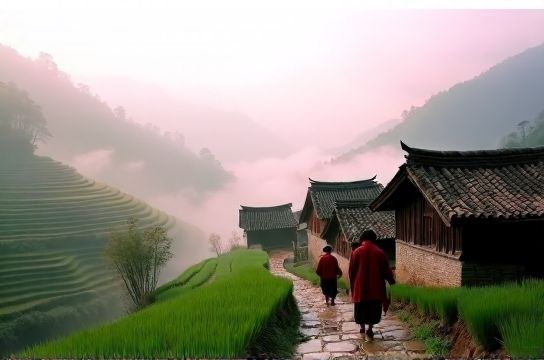
Want to escape the neon buzz of cities and dive into something real? Rural China is where the soul of the country still breathes—slow, raw, and deeply human. Forget the Great Wall selfies; we’re talking misty mountain villages, terraced rice fields carved by hand over centuries, and tea shared with elders who’ve never seen a selfie stick.
Why Rural China?
Over 50% of China’s population lives in rural areas, yet most tourists barely scratch past Beijing or Shanghai. Hidden in provinces like Yunnan, Guizhou, and Sichuan, you’ll find ethnic minority villages—Dong, Miao, Yi—where traditions haven’t been packaged for TikTok.
These communities live off the land, following lunar rhythms and ancestral customs. In Zhaojue County, Sichuan, for example, the Yi people still celebrate the Torch Festival with horse races and fire dances—a sight so intense it’ll burn your memory clean of city life.
Top 3 Off-the-Grid Mountain Destinations
- Yuanyang Rice Terraces (Yunnan): Carved into mountainsides by the Hani people over 1,300 years ago. At sunrise, the flooded fields mirror the sky like shattered glass.
- Xijiang Qianhu Miao Village (Guizhou): Home to over 1,400 Miao households—the largest苗village in China. Silver headdresses, sour fish soup, and midnight drum songs.
- Danba Tibetan Villages (Sichuan): Stone watchtowers rise above valleys where Tibetan women weave stories into every stitch of their embroidery.
What to Expect: Reality Check
No Uber. No Starbucks. Sometimes, no Wi-Fi. But what you gain is priceless: authenticity. Locals may stare at first—not from rudeness, but curiosity. A simple “Nǐ hǎo” with a smile opens doors.
Accommodations? Think family-run guesthouses with wood stoves and squat toilets. Comfort isn’t the point—connection is.
Travel Tips That Actually Help
- Best Time to Go: Spring (March–May) and autumn (September–November). Avoid July crowds and winter blackouts.
- How to Get There: High-speed trains get you close, but final legs require minivans or hiking. Pro tip: Hire a local guide from nearby towns—they know shortcuts and dialects.
- Pack Smart: Waterproof boots, power bank, basic Mandarin phrases, and an open mind.
Cultural Etiquette You Can’t Ignore
Don’t point at people. Never refuse food—it’s disrespectful. And if invited to a home, bring a small gift: fruit, tea, or kids’ toys.
In Miao villages, loud noises during festivals are sacred—not tourist performances. Put the phone down. Feel the beat.
Real Data: Rural Tourism Growth (2020–2023)
| Year | Rural Tourists (Million) | Revenue (Billion RMB) |
|---|---|---|
| 2020 | 2.8 | 790 |
| 2021 | 3.4 | 960 |
| 2022 | 3.1 | 880 |
| 2023 | 4.2 | 1,150 |
Source: China Ministry of Culture and Tourism
Final Thoughts: Is It Worth It?
Absolutely—if you’re ready to trade convenience for meaning. Rural China doesn’t perform culture. It lives it. You won’t leave with just photos. You’ll carry silence, stories, and a new definition of ‘wealth.’
This isn’t travel. It’s transformation.