
Rural China Travel Through Untouched Mountain Paths
- Date:
- Views:169
- Source:The Silk Road Echo
Ever traded city chaos for misty mountain trails and bamboo villages frozen in time? Welcome to rural China—where ancient footpaths wind through emerald terraces, and hospitality comes with a side of pickled vegetables and warm rice wine. Forget the Great Wall crowds; the real magic lies deep in Yunnan, Guizhou, and Sichuan’s hidden valleys.
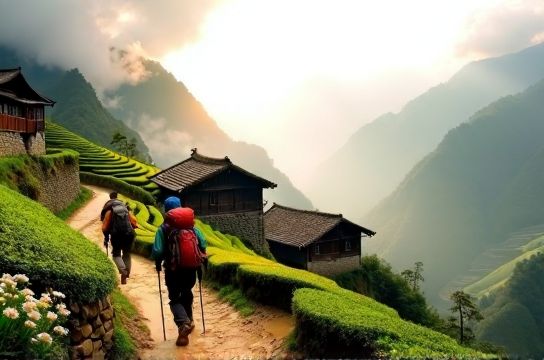
Why Rural China?
This isn’t just travel—it’s time travel. Over 600 traditional villages are officially protected by China’s Ministry of Housing, many nestled along centuries-old trade routes once trod by tea caravans. These paths aren’t on Google Maps, but they’re etched into local memory.
Take the Tea Horse Road in Yunnan: a 3,000-kilometer network linking Pu'er to Tibet. Hiking even a 20-km stretch reveals stone bridges draped in moss, abandoned waystations, and villagers who still speak dialects lost elsewhere.
Top 3 Off-the-Beaten-Path Trails
| Trail | Location | Difficulty | Best Season | Local Highlight |
|---|---|---|---|---|
| Yuanyang Rice Terraces Path | Yunnan | Moderate | Nov–Mar (water season) | Hani族 sunrise rituals |
| Langde Miao Village Loop | Guizhou | Easy | Apr–Jun (festival season) | Silver-jewelry making demo |
| Jiuzhaigou Valley Backroute | Sichuan | Challenging | Sep–Oct (fall colors) | Tibetan butter tea welcome |
Pro tip: Hire a local guide from the village coop. Not only do they know which trail avoids landslides after rain, but they’ll also introduce you to grandma’s homemade sticky rice cakes.
Culture Without Costumes
Rural China isn’t a museum. In places like Xijiang Miao Village, tourism has brought income—but also change. Yet, walk 3km beyond the lit tourist lanes, and you’ll find families weaving indigo cloth the same way their ancestors did 200 years ago.
Responsible travel matters. Ask before snapping photos. Share a meal instead of treating people like exhibits. Many homestays now offer “living culture” experiences—think grinding chili paste or helping plant seedlings—for around $15 USD.
Getting There & Staying Safe
Forget bullet trains. Reach these areas via regional flights (Kunming, Kaili) then minivans that bounce down narrow roads. Pack light but smart: waterproof boots, portable power banks, and a phrasebook (Mandarin helps, but smiles transcend language).
Health-wise, bring water purifier tablets. While clinics exist in county towns, emergencies mean long rides out. Travel insurance with helicopter evacuation? Worth every penny.
The Soul of the Journey
One morning in Yuanyang, I woke at dawn. Mist curled over flooded terraces like dragon breath. An elderly Hani farmer nodded as he led water buffalo to the fields. No words. Just shared silence under a peach-colored sky.
That’s what stays with you—not Instagram likes, but moments when time slows, and connection feels real. Rural China doesn’t give up its secrets easily. But if you walk gently, listen closely, and leave no trace? It might just let you in.