
Silk Road Oases Forgotten Towns of Western China
- Date:
- Views:204
- Source:The Silk Road Echo
Hidden beneath the golden sands and rugged mountains of western China lie ancient oases that once pulsed with life along the legendary Silk Road. These forgotten towns—whispers of caravans, spices, and silk—are more than relics; they're time capsules of cultural fusion and human resilience.
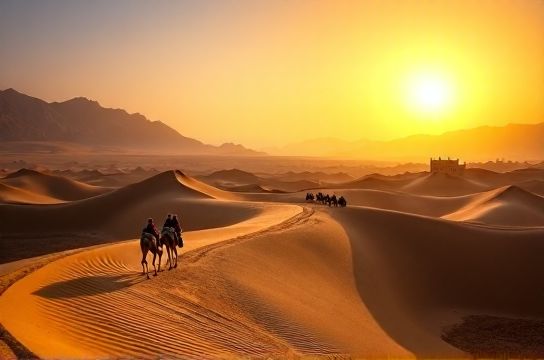
Turpan, Dunhuang, Kashgar—names that echo like poetry in the desert wind. Long before modern highways, traders from Rome to Chang’an trekked thousands of miles through harsh terrain, sustained only by these vital stops. At their peak, some hosted over 10,000 travelers annually, serving as hubs for Buddhism, Zoroastrianism, and early Islamic thought.
Take Turpan, nestled below sea level in Xinjiang. With summer temps hitting 47°C (117°F), it’s not exactly a beach getaway—but its karez irrigation system, a UNESCO-recognized marvel, turned barren land into vineyards still producing sweet muscat grapes today.
Then there’s Dunhuang, home to the Mogao Caves. Over 492 grottoes adorned with 45,000 square meters of frescoes tell stories of monks, merchants, and celestial beings. In the 10th century, the Library Cave sealed 50,000 manuscripts—Sanskrit sutras, Nestorian Christian texts, even early chess manuals—preserved by dry air for nearly a millennium.
And let’s not sleep on Kashgar’s Id Kah Mosque, where Friday prayers gather thousands under centuries-old cypress trees. Once a crossroads for Persian silver and Chinese porcelain, it remains one of Asia’s most vibrant bazaars.
But why visit now? Because climate change and urbanization are quietly erasing these sites. A 2023 UNESCO report warns that rising groundwater salinity threatens Turpan’s karez system, while mass tourism strains Dunhuang’s fragile murals.
Luckily, sustainable travel initiatives are gaining ground. The Chinese government now limits daily visitors to 6,000 at Mogao—and requires pre-booked eco-tours. Locals are reclaiming heritage through homestays and artisan markets, offering real connection over photo ops.
Top 3 Silk Road Oases Compared
| Town | Elevation (m) | Key Attraction | Annual Visitors (Est.) |
|---|---|---|---|
| Turpan | -154 | Karez Irrigation System | 3.2 million |
| Dunhuang | 1,139 | Mogao Caves | 2.8 million |
| Kashgar | 1,289 | Id Kah Mosque & Bazaar | 4.1 million |
Travel tip: Visit between April–June or September–October. Summer heat can be brutal, and winter sandstorms? Not Instagram-friendly.
These towns aren’t just about history—they’re living cultures fighting to survive. So when you sip tea in a Kashgar courtyard or trace a Tang Dynasty brushstroke in Dunhuang, remember: you’re not just touring the past. You’re helping preserve it.