
Discover Folk Songs in Remote Miao Hill Towns
- Date:
- Views:212
- Source:The Silk Road Echo
Ever dreamed of escaping the city chaos and diving into a world where music flows as freely as mountain streams? Welcome to the remote Miao hill towns of Guizhou and Yunnan, where folk songs aren’t just performances—they’re living stories passed down through generations.
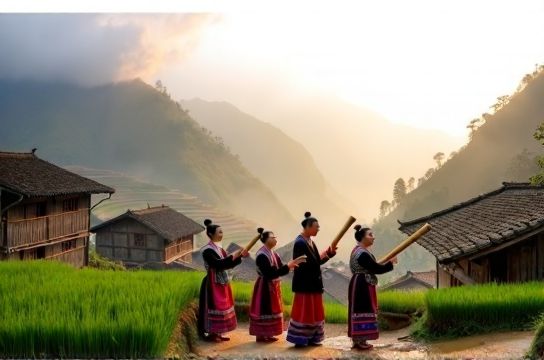
The Miao people, one of China’s 56 officially recognized ethnic groups, have no written language. So how do they preserve their history, love tales, and spiritual beliefs? Through song. Yes—every melody carries centuries of culture, emotion, and identity.
In villages like Xijiang in Guizhou—the largest Miao settlement in China—over 6,000 residents still wear traditional silver headdresses and sing ‘Flying Songs’ (飞歌) from hilltop to hilltop. These high-pitched, echoing tunes can travel over valleys, used historically to call lovers or signal across distances.
Why Miao Folk Music Feels So Magical
It’s not just the haunting vocals—it’s the context. Miao songs are often performed during festivals like the Lusheng Festival or Sisters’ Meal Festival, where entire communities gather in vibrant attire. Instruments like the lusheng (a reed pipe) blend with polyphonic singing, creating a soundscape that feels both ancient and alive.
According to UNESCO, Miao vocal traditions are part of China’s Intangible Cultural Heritage. Yet, fewer than 30% of Miao youth under 25 can now sing traditional songs fluently—a wake-up call for cultural preservation.
Top 3 Miao Villages to Experience Authentic Folk Songs
| Village | Location | Best Time to Visit | Unique Musical Tradition |
|---|---|---|---|
| Xijiang Qianhu Miao Village | Guizhou Province | June–August | Choral ‘Drinking Songs’ during communal feasts |
| Langde Village | Eastern Guizhou | Spring Festival & Lusheng Festival | Lusheng dance parades with 12-part harmonies |
| Duoyishu Village | Yunnan Province (near Yuanyang) | November–February | Harvest chants sung at sunrise over rice terraces |
Pro tip: Visit during local festivals. That’s when elders and children perform together, and you might even get invited to join a singing duel—a playful tradition where suitors exchange improvised lyrics!
How to Be a Respectful Traveler
Remember: You’re stepping into sacred cultural spaces. Avoid recording songs without permission. Instead, participate—learn a line, clap along, or share a cup of homemade rice wine. Many villagers appreciate genuine curiosity more than passive observation.
And yes—Wi-Fi is spotty (if it exists), but that’s the point. This is slow travel at its purest: raw, real, and rhythm-filled.
So pack light, come open-hearted, and let the hills sing to you. Because once you’ve heard a Miao grandmother’s voice ripple through the misty dawn, you’ll understand—some songs don’t just touch your ears. They change your soul.