
Experience Daily Life in Remote Gansu Hamlets
- Date:
- Views:219
- Source:The Silk Road Echo
Ever dreamed of stepping off the grid and into a world where time moves slower, smiles are genuine, and life revolves around sheep, barley fields, and morning tea with locals? Welcome to the remote hamlets of Gansu Province — a hidden gem tucked between rugged mountains and endless plateaus, where tradition isn’t preserved; it just never left.
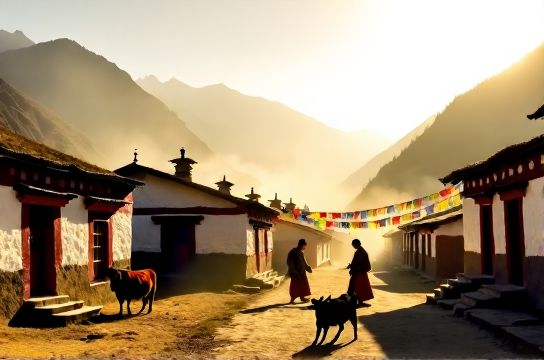
Nestled in China’s northwest, Gansu is often bypassed by tourists racing to Dunhuang’s Mogao Caves. But venture beyond the Silk Road highlights, and you’ll find villages like Tsoiling and Xiahe’s satellite hamlets, where Tibetan, Hui, and Han cultures blend like hues at sunset.
A Day in the Life: From Yak Butter Tea to Hand-Pulled Noodles
Mornings start early — think 6 AM with the clang of cowbells and smoke curling from stone homes. Locals rise to tend livestock or head to communal prayer flags that flutter like whispered blessings. Breakfast? A hearty bowl of qingke (highland barley) porridge, washed down with salty yak butter tea — an acquired taste, yes, but one that warms you down to your boots.
Farming here isn’t industrial; it’s personal. Most families cultivate less than 2 acres. Their survival depends on seasonal rhythms — planting in April, harvesting in September. And while income averages just ¥8,000–12,000 annually, contentment runs deep.
| Aspect | Detail |
|---|---|
| Average Household Income | ¥9,500/year (~$1,300) |
| Main Crops | Barley, potatoes, peas |
| Livestock | Yaks, goats, sheep |
| Altitude Range | 2,800–3,500 meters |
| Primary Languages | Tibetan, Mandarin, Dongxiang |
Culture That Feels Like Home (Even If It’s Not)
Hospitality here isn’t performative — it’s sacred. It’s common for strangers to be invited into homes for steaming plates of hand-pulled lamian noodles or sweet youzi fried dough. Don’t refuse — it’s polite to eat at least a few bites!
Religion weaves through daily routines. You’ll see monks chanting at dawn, children spinning prayer wheels, and homes adorned with thangka paintings. In summer, village festivals explode with color — horse races, singing duels, and butter sculptures that look too beautiful to melt.
How to Visit Respectfully (And Meaningfully)
- Stay with locals: Homestays in villages near Labrang Monastery cost ~¥80/night and include meals. Your money supports families directly.
- Dress modestly: Shoulders and knees covered, especially near temples.
- Ask before photographing: A smile and gesture go further than words.
- Bring small gifts: School supplies or warm socks are always appreciated.
The best time to visit? June to September — when the weather’s mild and festivals abound. Winters are harsh, with temps dipping below -15°C, but if you don’t mind the cold, the snow-draped scenery is cinematic.
Why This Trip Changes You
Visiting rural Gansu isn’t about ticking boxes. It’s about redefining connection. No Wi-Fi? No problem. Here, conversations flow over shared meals, kids teach you jump-rope games in broken English, and silence feels sacred, not awkward.
In a world obsessed with speed, these hamlets remind us that life isn’t measured in likes — it’s measured in moments: sipping tea with a grandmother who’s lived in the same house for 80 years, walking mountain trails with a shepherd and his dog, or simply watching the sun paint the hills gold.
So ditch the itinerary. Let go of expectations. And let Gansu’s quiet magic do the rest.