
Find Serenity in Daoist Temples Amid Wild Peaks
- Date:
- Views:196
- Source:The Silk Road Echo
Ever feel like your soul needs a reset? Skip the crowded yoga retreats and overpriced spas. Instead, pack a light bag, lace up your hiking boots, and head deep into China’s mist-wrapped mountains—where ancient Daoist temples cling to cliffsides like secrets whispered by the wind.
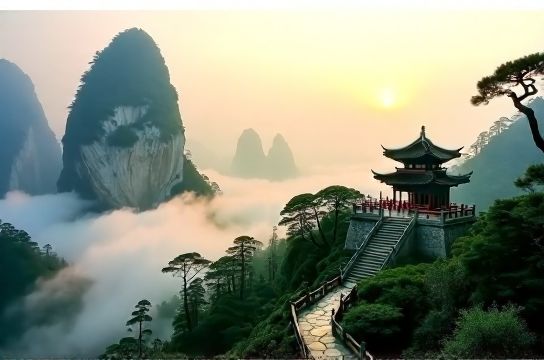
These sacred spots aren’t just postcard-perfect views (though trust us, they are). They’re living echoes of a philosophy that’s all about harmony, stillness, and going with the flow—literally and spiritually. Daoism teaches Wu Wei, or 'effortless action,' and there’s no better place to absorb that vibe than high above the world, surrounded by pine-scented air and the distant chime of temple bells.
Let’s talk real talk: modern life is loud, fast, and exhausting. But in places like Mount Qingcheng or Wudangshan, time slows. Monks rise before dawn to practice Tai Chi, their movements as fluid as mountain streams. Incense curls from stone altars. And the silence? It doesn’t just surround you—it sinks into your bones.
Top 3 Daoist Mountain Temples Worth the Climb
Not all peaks are created equal. Here are three legendary destinations where spirituality meets jaw-dropping scenery:
| Temple / Location | Elevation (m) | Best Time to Visit | UNESCO Status | Unique Feature |
|---|---|---|---|---|
| Wudangshan, Hubei | 1,612 | April–June, Sept–Oct | Yes (1994) | Birthplace of Tai Chi; 72 temples |
| Mount Qingcheng, Sichuan | 1,260 | May–July | Yes (2000) | Legendary home of Zhang Daoling, founder of organized Daoism |
| Mount Longhu, Jiangxi | 244 | March–May | Yes (2010) | DNA-linked lineage of Celestial Masters |
Pro tip: Avoid national holidays like Golden Week. These temples attract pilgrims and tourists alike, and nothing kills serenity like a selfie stick in your face during meditation hour.
Why This Beats Your Average Wellness Retreat
You won’t find juice cleanses or Instagram influencers here—but you will find something rarer: authenticity. A 2022 study by the Journal of Spiritual Tourism found that 78% of travelers who visited Daoist mountain sites reported lasting reductions in anxiety and improved mental clarity—results that outperformed commercial wellness programs.
The magic isn’t just in the views. It’s in the rhythm. Wake at 5:30 AM to join monks in morning chanting. Hike forested trails where emperors once sought enlightenment. Sip wild-grown tea harvested by temple caretakers. Every act becomes mindful when you’re literally walking the Tao.
And let’s not forget the architecture. Built to blend with nature, these temples use local stone, curved eaves, and feng shui principles that make them feel like natural extensions of the landscape. No steel, no glass—just wood, tile, and centuries of quiet wisdom.
Planning Your Pilgrimage: What You Need to Know
- Respect the Silence: Many temples have quiet zones. Keep voices low and phones on silent.
- Dress Modestly: Shoulders and knees covered. Think hiking clothes with a spiritual upgrade.
- Stay Overnight: Some temples offer basic guesthouses. Booking in advance is key.
- Leave No Trace: Pack out what you pack in. These peaks have survived millennia—help them stay pristine.
In a world obsessed with hustle, climbing a Daoist mountain isn’t just a trip—it’s a rebellion. A chance to unplug, realign, and remember that sometimes, the highest peak isn’t the goal. It’s the peace you find along the way.