
Ethnic Tapestry: Discovering Minority Cultures in Remote China
- Date:
- Views:269
- Source:The Silk Road Echo
Ever thought about what it’s like to step into a world where time feels slower, colors are brighter, and traditions run deep? Welcome to the hidden corners of rural China — not the skyscrapers and bullet trains, but the mountain villages, grassland nomads, and centuries-old customs of China’s ethnic minorities. This is where the real magic happens.
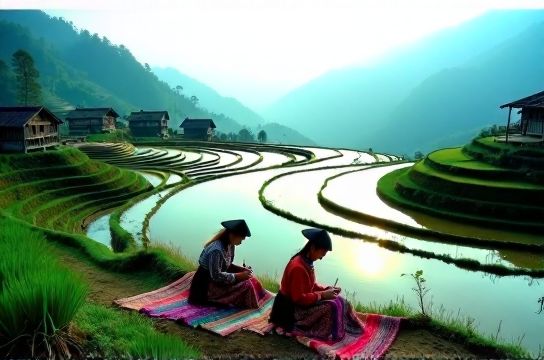
China isn’t just one culture — it’s actually home to 56 officially recognized ethnic groups. While the Han Chinese make up the majority, the other 55 groups bring a wild mix of languages, festivals, clothing, and food that’ll blow your mind. Think rainbow-colored batik from the Miao people in Guizhou, throat-singing Dong villagers in wooden drum towers, or Tibetan monks chanting at sunrise in Yunnan’s highlands.
One of the coolest spots? Zhaoxing, a peaceful Dong village tucked away in southern China. No neon lights here — just stilted wooden houses, rice paddies, and locals weaving intricate silver jewelry by hand. At night, the whole village gathers under the ancient drum tower, singing polyphonic folk songs that’ve been passed down for generations. It’s not a performance for tourists; it’s just… life.
Then there’s Yuanyang, where the Hani people have carved jaw-dropping rice terraces into the mountainsides over 1,300 years ago. These aren’t just pretty to look at — they’re a genius feat of engineering, using natural water flow and forest conservation long before ‘sustainability’ became a buzzword. When the sun hits the flooded fields at dawn? Pure gold.
And let’s talk fashion. The Zhuang, Yi, and Bai communities don’t do fast fashion — they wear identity. Hand-embroidered jackets, indigo-dyed scarves, silver headdresses that jingle with every step. Each stitch tells a story. Even their festivals are wearable art — like the Sisters’ Meal Festival, where Miao women dress like queens and toss colored rice balls to potential suitors. Yes, really.
But here’s the thing: these cultures aren’t frozen in time. They’re adapting. Young folks are blending tradition with TikTok, sharing dances online while still honoring elders’ wisdom. Still, modernization brings pressure. Some villages face tourism overload, others struggle to keep youth from moving to cities.
So how can you experience this respectfully? Go slow. Stay in family-run homestays, eat sour fish soup made from grandma’s recipe, learn a few words in the local dialect. Skip the selfie sticks and ask questions instead. These communities aren’t exhibits — they’re living, breathing worlds.
Traveling to these remote regions isn’t always easy (think winding roads and spotty Wi-Fi), but that’s kind of the point. You trade convenience for authenticity. And when you sit around a fire with a Naxi elder sharing stories under a sky full of stars, you realize this is travel at its most real.
China’s ethnic tapestry isn’t just beautiful — it’s vital. Every thread holds history, resilience, and a way of life worth preserving. So next time you think of China, don’t just picture Beijing or Shanghai. Picture a girl in a hand-stitched dress dancing during Torch Festival, or a herder playing horsehead fiddle on the grasslands. That’s the China most people never see — but absolutely should.