
The Rise of Agritourism in China: Picking Tea in Anhui’s Huangshan Mountains
- Date:
- Views:236
- Source:The Silk Road Echo
If you've ever dreamed of swapping city chaos for misty mountain trails, fresh air, and hands-on tea picking under a golden sunrise—welcome to agritourism in China. And there's no better place to start than the emerald slopes of Huangshan in Anhui Province, where centuries-old tea traditions meet modern eco-travel.
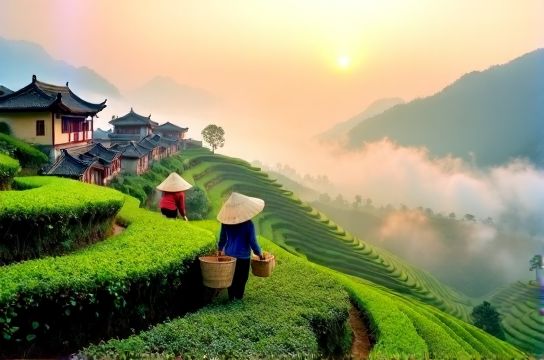
Huangshan, literally 'Yellow Mountain,' isn’t just a UNESCO World Heritage Site famous for its jaw-dropping granite peaks and swirling clouds—it’s also home to one of China’s most prized green teas: Huangshan Maofeng. This delicate, downy-tipped tea has been cultivated here since the Ming Dynasty, and today, travelers are flocking not just to sip it—but to grow, pick, and process it themselves.
Agritourism in China is booming, with the market value hitting over 1.4 trillion RMB ($200 billion USD) in 2023 (Ministry of Agriculture data). And tea-based rural tourism? It’s one of the fastest-growing niches. In Anhui alone, more than 380 agritourism villages now welcome urban visitors seeking authenticity, sustainability, and a deeper connection to food sources.
Why Huangshan? The Perfect Blend of Nature & Culture
The high altitude (800–1,100 meters), mineral-rich soil, and year-round fog create ideal conditions for slow-growing, flavor-packed tea leaves. But beyond climate, it’s the cultural immersion that sets this experience apart.
Imagine waking up in a restored Huizhou-style farmhouse, sipping local honey tea, then hiking up terraced hillsides with a local tea master. You’ll learn to pluck only the 'two leaves and a bud'—the gold standard in fine tea harvesting. Later, you’ll roast the leaves over bamboo trays, guided by generations of wisdom.
Tea Tourism at a Glance: Huangshan vs. National Average
| Metric | Huangshan Tea Villages | National Agritourism Average |
|---|---|---|
| Annual Visitors (2023) | 2.1 million | 450,000 |
| Avg. Stay Duration | 2.8 days | 1.5 days |
| Visitor Satisfaction Rate | 96% | 83% |
| Income from Tourism (% of total village income) | 68% | 39% |
This isn’t just tourism—it’s transformation. Local farmers earn up to 40% more during peak tea season thanks to direct-to-consumer sales and homestay hosting. Plus, many villages now use organic practices to meet eco-conscious demand.
How to Plan Your Tea Adventure
- Best Time to Visit: Early April to mid-May (spring harvest season).
- Top Villages: Tangkou, Xidi, and Hongcun (the latter two are UNESCO-listed ancient towns).
- Must-Do Activities: Tea picking, pan-frying leaves, calligraphy workshops, hiking Yunqi Trail.
- Budget Tip: Homestays start at 200 RMB (~$28 USD) per night, including meals and activities.
Sustainability matters. Responsible operators now limit group sizes and educate guests on soil conservation and seasonal cycles. Some even offer 'adopt-a-tea-bush' programs—where you return each year to harvest 'your' plant.
In a world of rushed travel and filtered Instagram moments, agritourism in Huangshan feels refreshingly real. It’s slow, sensory, and soul-nourishing. You don’t just take memories—you take part in a living tradition.
So next time you brew a cup of green tea, ask yourself: could this be the one I picked under the misty peaks of Huangshan? If not, maybe it’s time to make it happen.