
The Road Less Traveled: Uncovering China’s Hidden Countryside
- Date:
- Views:249
- Source:The Silk Road Echo
Forget the neon lights of Shanghai and the crowds at the Forbidden City. If you really want to feel China, you’ve gotta hit the backroads—where mist curls over emerald rice terraces, where grandmothers still pound glutinous rice in wooden mortars, and where time moves at the pace of a water buffalo strolling home.
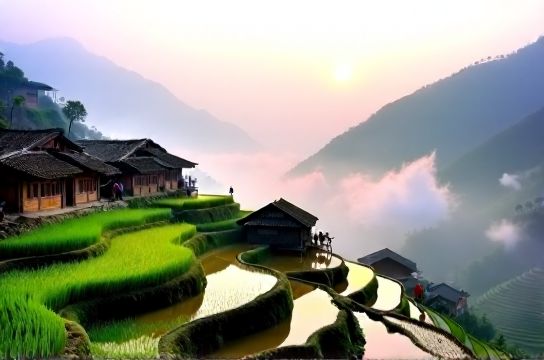
Welcome to rural China—the country’s best-kept secret. And trust me, once you go, you’ll wonder why everyone’s been flocking to the same five cities.
Why Go Off the Beaten Path?
China’s countryside isn’t just pretty—it’s alive. Over 40% of China’s population still lives in rural areas (World Bank, 2023), yet most tourists barely scratch the surface. These villages offer something no city can: authenticity. Think hand-pulled noodles made at dawn, tea harvested from family plots, and festivals rooted in centuries-old traditions.
Plus, it’s affordable. While a night in a Beijing hutong hotel might cost $120, you can stay in a family-run guesthouse in Yunnan for under $30—and get breakfast, a guide, and a front-row seat to daily village life.
Top 3 Hidden Gems You Need to See
- Yuanyang Rice Terraces (Yunnan): Carved into mountains over 1,300 years ago by the Hani people, these terraces look like liquid gold at sunrise. Visit during spring flooding (March–April) for mirror-like reflections.
- Chengkan Village (Anhui): A Ming Dynasty time capsule with ink-wash vibes. Surrounded by lotus ponds and pine-covered hills, this place feels like stepping into an ancient scroll painting.
- Xijiang Miao Village (Guizhou): Home to the largest community of Miao people. Don’t miss the silver headdress festival—where women wear jewelry weighing up to 10 pounds!
Travel Tips That Actually Help
Rural travel = adventure. But a little prep goes a long way:
- Download offline maps (Google Maps won’t cut it—try Baidu Maps or Amap).
- Bring cash. Many villages don’t accept cards—or even have reliable internet.
- Learn three phrases in Mandarin: nǐ hǎo (hello), xièxie (thank you), and wǒ bù dǒng (I don’t understand). Locals will melt.
When to Go? Here’s the Lowdown
Timing is everything. Check out this quick seasonal guide:
| Season | Best For | Region |
|---|---|---|
| Spring (Mar–May) | Rice planting, blooming plum trees | Yunnan, Guangxi |
| Summer (Jun–Aug) | Festivals, green landscapes | Guizhou, Sichuan |
| Autumn (Sep–Nov) | Harvest season, golden fields | Anhui, Hunan |
| Winter (Dec–Feb) | Snowy villages, hot springs | Jiangxi, Zhejiang |
Pro tip: Avoid Chinese holidays like Golden Week (early October). Even remote spots get swarmed.
The Real Reward? Human Connection
Out here, tourism isn’t transactional. It’s personal. I once shared a dinner of smoked pork and wild greens with a family in Guizhou who refused payment—just asked I remember their story. That’s the magic.
So ditch the itinerary. Wander down a dirt path. Smile at a farmer. Let the road decide.
Because in rural China, the journey is the destination.