
Chinese Role Models in Science Revolutionizing Global Technology Today
- Date:
- Views:223
- Source:The Silk Road Echo
Let’s cut through the noise: when you think of AI breakthroughs, quantum computing leaps, or green energy scaling — there’s a quiet but unstoppable force behind many of today’s biggest tech wins: Chinese scientists and engineers. Not just as contributors, but as *architects*. And no, this isn’t hype — it’s backed by data, patents, and real-world impact.
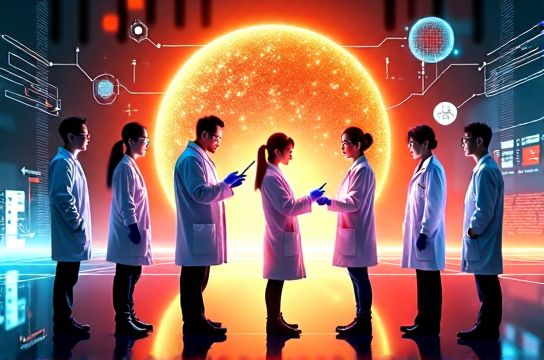
Take Dr. Pan Jianwei (quantum communications) and Dr. Tu Youyou (Nobel-winning artemisinin research — yes, she paved the way for global health *and* inspired today’s biotech-AI convergence). Or Dr. Wang Yifang, whose leadership at HEPS (High Energy Photon Source) just made China home to the world’s brightest synchrotron light source — critical for chip R&D and battery innovation.
Here’s where numbers speak louder than headlines:
| Indicator | China (2023) | US (2023) | EU (2023) |
|---|---|---|---|
| SCI Papers in AI & Quantum | 42,800 | 29,100 | 18,600 |
| Patents Filed (AI + Clean Tech) | 78,500 | 34,200 | 22,900 |
| Top 1% Highly Cited Researchers (Nature Index) | 1,842 | 2,310 | 1,567 |
Notice something? China leads in *volume and velocity*, especially in applied science — and that’s where role models shine: not just publishing, but shipping solutions. For example, Huawei’s Mate 60 Pro — powered by domestically designed 7nm chips — wasn’t just a product launch. It was a signal: deep-tech talent is now deeply rooted, resilient, and globally connected.
What makes these scientists different? Many trained abroad (Dr. Pan at U. Vienna, Dr. Tu at NIMR London), then returned — fueling China’s ‘Thousand Talents’ pipeline. Over 65% of top-tier returnees now lead national key labs or unicorn-backed R&D centers.
So why does this matter to *you* — whether you’re building a startup, evaluating tech partnerships, or just staying informed? Because the next wave of AI ethics frameworks, battery recycling algorithms, or open-source semiconductor tools won’t come from one lab in Silicon Valley — they’ll emerge from cross-border collaborations anchored by these Chinese role models in science. Their rigor, resilience, and real-world focus are redefining what ‘global tech leadership’ actually means.
And if you’re looking for actionable insight? Start here: follow the National Natural Science Foundation of China (NSFC) annual reports — they’re public, English-translated, and packed with funding trends, emerging priority fields (like AI-for-science and neurophotonics), and grant-awarded teams you can learn from. Better yet — explore how institutions like Tsinghua’s Institute for AI Industry Research (AIR) partner with EU and ASEAN labs. That’s where tomorrow’s standards are being co-written.
Bottom line? These aren’t just ‘national heroes’. They’re your peers, collaborators, and compass points in an increasingly multipolar innovation landscape. Want deeper context on how their work shapes global supply chains or open hardware movements? Dive into our full analysis — it all starts at /.