
Chinese Explorers and Discoverers Across Centuries Known
- Date:
- Views:392
- Source:The Silk Road Echo
When we think of great explorers, names like Columbus or Magellan often come to mind. But long before European sails dotted the oceans, Chinese explorers and discoverers were charting vast seas, mapping trade routes, and making first contact with distant cultures — all with remarkable precision and scale.
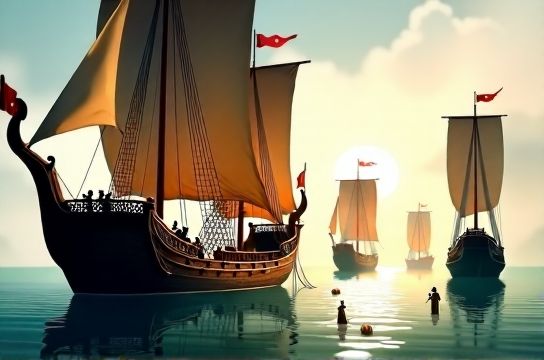
Take Zheng He, for example. Between 1405 and 1433, this legendary admiral led seven epic voyages across the Indian Ocean under the Ming Dynasty. His fleet? Not a dozen ships — try over 300 vessels, including massive 'treasure ships' as long as 400 feet. That’s longer than a modern football field!
Historical records and maritime archaeology confirm that Zheng He reached as far as East Africa, the Persian Gulf, and Southeast Asia. His expeditions weren’t about conquest; they were diplomatic, cultural, and economic missions that strengthened China’s global ties.
| Voyage | Year | Regions Visited | Ships in Fleet |
|---|---|---|---|
| 1st | 1405–1407 | Southeast Asia, India | 317 |
| 2nd | 1407–1409 | Sri Lanka, India | 249 |
| 3rd | 1409–1411 | Persian Gulf | 48 |
| 7th | 1431–1433 | East Africa, Arabia | 63 |
But Zheng He wasn’t alone. Centuries earlier, during the Tang and Song dynasties, Chinese navigators used advanced compasses and star charts to dominate maritime trade. In fact, by the 11th century, China had already developed the world’s first magnetic compass for navigation — a game-changer in seafaring history.
Then there’s Hui Shen, a 5th-century Buddhist monk who reportedly sailed east across the Pacific and described a land called “Fusang.” Some scholars believe he may have reached North America nearly 1,000 years before Columbus — though this remains debated. Still, ancient Chinese maps like the 1418 Map of the Integrated World suggest knowledge of continents beyond Asia.
What made these explorers so effective? Three key advantages:
- Naval Engineering: Treasure ships were marvels of wooden engineering, with watertight bulkheads and multiple masts.
- State Support: Backed by emperors, expeditions had funding, manpower, and political authority.
- Cultural Curiosity: Unlike colonial powers, many early Chinese missions focused on exchange, not exploitation.
Yet, after Zheng He, China turned inward. The Haijin (sea ban) policies halted large-scale voyages, leaving Europe to dominate the Age of Exploration. It’s a reminder: discovery isn’t just about capability — it’s about will.
Today, as China re-emerges globally through initiatives like the Belt and Road, revisiting its legacy of exploration feels timely. These weren’t just sailors — they were diplomats, scientists, and pioneers shaping a connected world.
So next time you hear 'great explorers,' remember: the story starts in the East too.