
Women Chinese Achievers in STEM Fields Today
- Date:
- Views:301
- Source:The Silk Road Echo
If you're curious about who’s shaping the future of science and tech from China, let me tell you—Chinese women in STEM are not just participating; they’re leading. From AI breakthroughs to space missions, their impact is global, quiet, and powerful. And no, this isn’t just inspiration fluff—this is real data-driven change.
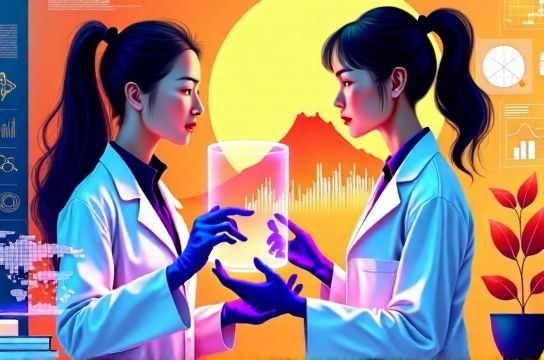
Why Women in Chinese STEM Are Rising Fast
China has one of the highest percentages of female researchers in science and engineering worldwide. According to UNESCO, women make up nearly 40% of researchers in China—higher than the global average of 33%. In fields like biology and chemistry, that number jumps to over 50%. That’s not a coincidence. Government-backed education reforms and strong cultural emphasis on academic excellence have created a pipeline of talent—and women are walking right through it.
Trailblazers You Should Know
Take Dr. Yi Cui, a materials scientist originally from Hunan, now pioneering battery tech at Stanford. Her work on silicon nanowire batteries could double smartphone battery life. Or Tu Youyou, Nobel laureate who discovered artemisinin—a malaria treatment saving millions. Though her work started decades ago, she remains a symbol of what Chinese women scientists can achieve.
Today, young stars are emerging fast. At Baidu and Huawei, over 35% of AI research teams are led by women. Companies aren’t just hiring them—they’re putting them in charge.
STEM Education: The Real Game Changer
One reason? Education. In China, girls consistently outperform boys in science subjects by middle school. A 2023 OECD report showed that Chinese girls scored 568 in science (PISA), compared to the OECD average of 493.
| Country | Female STEM Graduates (%) | Female Researchers (%) |
|---|---|---|
| China | 54% | 39.7% |
| USA | 42% | 34% |
| Germany | 38% | 31% |
| Japan | 28% | 16% |
This table shows it clearly: China leads in both education and workforce participation among major economies.
Challenges Still Exist—But Progress Is Real
Of course, it’s not all smooth sailing. Only about 15% of full professorships in STEM go to women in top Chinese universities. But compare that to 9% in Japan or 12% in South Korea, and you see the relative advantage.
The key difference? Support systems. Programs like the National Natural Science Foundation of China now require gender balance in grant review panels. Mentorship networks for young female scientists are expanding fast in cities like Shenzhen and Hangzhou.
What This Means for the Future
If you're investing in tech, watching innovation trends, or raising a daughter interested in science, pay attention. The next AI breakthrough or clean energy solution might come from a lab in Beijing led by a woman with a degree from Tsinghua.
And if you want to learn more about how these changes affect global tech competition, check out our deep dive on women Chinese achievers in STEM.
The bottom line? Talent is gender-neutral. Opportunity isn’t always—but in today’s China, it’s getting closer.