
Chinese Figures Who Transformed Education in China
- Date:
- Views:351
- Source:The Silk Road Echo
If you're curious about how education in China evolved into the powerhouse system it is today, you can't ignore the Chinese figures who transformed education in China. These visionaries didn't just build schools—they reshaped entire philosophies, blending tradition with modernity. Let’s dive into the lives and impacts of key influencers who laid the foundation for today’s academic excellence.
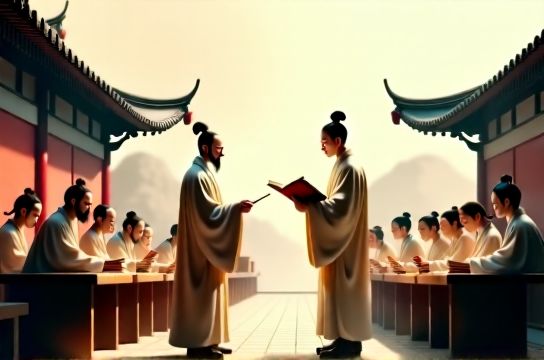
Confucius: The Original Education Revolutionary
No conversation about Chinese education starts without Confucius. Around 500 BCE, he introduced the radical idea that education should be accessible to all, not just nobility. His teachings emphasized moral integrity, lifelong learning, and structured curricula—principles still echoed in classrooms today.
Confucius’ influence extended beyond philosophy. He helped establish the imperial examination system (keju), which later became the backbone of civil service recruitment. For over 1,300 years, this system shaped merit-based learning across dynasties.
Cai Yuanpei: Modernizing Mindsets
Jumping to the 20th century, Cai Yuanpei was the chancellor of Peking University and a fierce advocate for academic freedom. Under his leadership, the university welcomed diverse ideologies—from Marxism to liberalism—making it a hub for intellectual revolution.
Cai championed the integration of Western sciences with Chinese humanities. His reforms laid the groundwork for modern higher education in China, promoting critical thinking over rote memorization.
Tao Xingzhi: Education for the Masses
While others focused on elite institutions, Tao Xingzhi believed education should reach farmers and workers. Inspired by John Dewey’s pragmatism, he founded rural schools and promoted "learning by doing." His life-changing educational models empowered millions who’d been excluded from formal learning.
Tao’s legacy lives on in today’s vocational training programs and rural outreach initiatives.
Modern Impact: By the Numbers
The long-term impact of these pioneers is clear when we look at recent data:
| Year | Literacy Rate (%) | University Enrollment (millions) | Compulsory Education Duration |
|---|---|---|---|
| 1949 | ~20% | 0.1 | None |
| 1978 | 65% | 0.8 | 9 years |
| 2023 | 97% | 44.3 | 9 years |
These numbers don’t lie. From near-zero access to nearly universal literacy and mass higher education, the transformation has been explosive—and much of it traces back to foundational reforms inspired by these key Chinese figures who transformed education in China.
Final Thoughts
Today’s Chinese students compete globally not by accident, but because generations of bold educators refused to accept the status quo. Whether through philosophy, policy, or grassroots action, these leaders proved that education is the most powerful tool for national change.
So next time you hear about China’s academic achievements, remember the minds behind the movement. Their legacies aren’t just in textbooks—they’re in every classroom, every exam, and every dream of a better future.