
Rural vs Urban Living in Modern China
- Date:
- Views:320
- Source:The Silk Road Echo
So you're thinking about life in China — cool move. But wait, city buzz or countryside calm? That’s the real question. In modern China, the gap between rural and urban living isn’t just about skyline views versus rice fields. It’s a full-on lifestyle showdown with jobs, costs, internet speed, and even dumpling quality on the line.
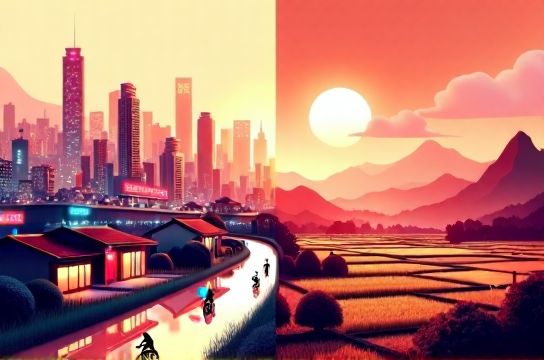
The Great Divide: City Glamour vs. Country Calm
Urban China is all neon, high-speed rail, and 24/7 bubble tea runs. Cities like Shanghai, Shenzhen, and Beijing are economic powerhouses. Meanwhile, rural areas — home to nearly 36% of China’s population (as of 2023) — offer slower rhythms, lower costs, and deep cultural roots.
But don’t sleep on the countryside. Thanks to China’s rural revitalization strategy, villages are getting fiber internet, e-commerce hubs, and even boutique eco-resorts. Still, when it comes to convenience and career moves, cities dominate.
Let’s Talk Numbers: Urban vs Rural at a Glance
| Factor | Urban Average | Rural Average |
|---|---|---|
| Annual Income (RMB) | 98,000 | 20,000 |
| Housing Cost (per sqm) | 35,000 | 4,000 |
| Internet Speed (Mbps) | 180 | 85 |
| Life Expectancy | 80.3 years | 75.1 years |
| Access to Healthcare | 98% | 76% |
Yep, that income gap stings. But so does paying eight times more for a shoebox apartment in downtown Guangzhou. And while rural internet used to be dial-up slow, 5G expansion is closing the digital divide — fast.
Daily Life: What’s It Really Like?
In Shanghai, your morning might start with a latte from a unicorn coffee shop, followed by a WeChat meeting from a co-working space. Commute? Probably a slick metro ride — if you avoid rush hour. Rent for a one-bedroom? Around 6,000–8,000 RMB/month.
Now picture Guizhou village life. Your commute is a 10-minute walk past terraced fields. Groceries come from local markets — fresh tofu, hand-pulled noodles, veggies grown behind your neighbor’s house. Rent? Maybe 500 RMB/month for a cozy, traditional home.
But here’s the kicker: rural China now has Taobao villages — over 7,000 of them — where farmers sell goods online and earn serious cash. Some rural incomes have doubled in a decade thanks to e-commerce.
Career & Opportunity: Where’s the Hustle?
Cities = opportunity central. Tech jobs, finance, creative gigs — they’re all concentrated in urban zones. Over 80% of China’s startups launch in Tier-1 and Tier-2 cities.
But rural areas aren’t just sitting still. With government incentives, agritech, tourism, and green energy projects are booming. Want to run a homestay in Yunnan or launch an organic tea brand? The countryside is open for business.
Quality of Life: Peace vs. Pace
Urban life is fast, flashy, and frankly exhausting. Air pollution, noise, and sky-high stress levels are real. In Beijing, average PM2.5 levels hit 78 μg/m³ — way above WHO’s safe limit.
Rural areas? Cleaner air, stronger communities, and less FOMO. A 2022 survey found that 68% of rural residents report high life satisfaction — compared to 54% in cities.
Final Verdict: Which Life Fits You?
If you’re chasing career growth, nightlife, and cutting-edge tech — go urban. But if you value space, peace, and authentic culture, rural China might surprise you. The future isn’t just skyscrapers; it’s smart villages, digital farms, and balanced living.
China’s rural-urban story isn’t about which is better — it’s about choice. And right now, both sides are evolving faster than a TikTok trend.