
Discover the Heart of Chinese Street Food and City Life
- Date:
- Views:231
- Source:The Silk Road Echo
If you've ever wandered through a neon-lit alley in Chengdu at midnight, dodging steam from bubbling hot pots and inhaling the smoky scent of cumin-laced lamb skewers, then you already know: Chinese street food isn't just dinner—it's urban poetry. It's where tradition sizzles on open grills, where generations trade secrets over soy-sauce-drenched noodles, and where city life pulses loudest.
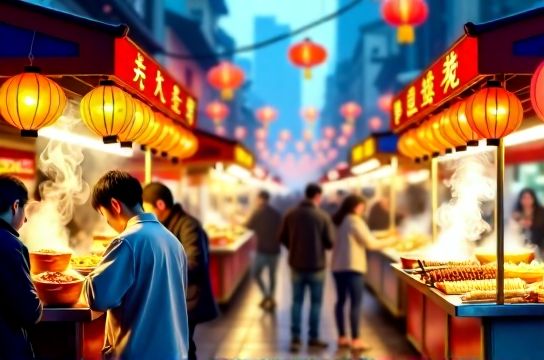
The Soul of the Streets: Why China’s Snack Culture Rules
Forget Michelin stars—real culinary magic happens on sidewalks. According to China’s Ministry of Commerce, the street food market topped ¥300 billion (over $40 billion USD) in 2023, growing at nearly 8% annually. Why? Because every region has its signature bite, and every bite tells a story.
Take Xi'an's legendary roujiamo—often called 'China's hamburger.' This flaky flatbread stuffed with spiced pork isn’t fast food; it’s a 2,000-year-old legacy. Or dive into Guangzhou’s dim sum alleys, where carts roll at dawn and grandmas debate the perfect siu mai fold.
Top 5 Must-Try Street Foods (And Where to Find Them)
Ready to eat your way through China? Here are the unmissable hits:
| Dish | Origin | Price Range (CNY) | Best Time to Eat | Pro Tip |
|---|---|---|---|---|
| Jianbing (Savory Crepe) | Tianjin | 6–12 | Breakfast | Ask for bù yào là (no辣) if you can't handle chili! |
| Chuan'r (Spicy Lamb Skewers) | Xinjiang | 2–5 per stick | Night markets | Freshly grilled > pre-cooked trays |
| Stinky Tofu | Changsha | 8–15 | Late night | Pair with pickled cabbage to cut the funk |
| Xiaolongbao | Shanghai | 10–20 (6 pcs) | Lunch | Bite the skin first—soup inside! |
| Roujiamo | Xi'an | 8–15 | All day | Go for pork belly, not lean meat |
Street Food = Social Glue
In megacities like Shanghai or Shenzhen, where skyscrapers scrape the clouds, street vendors offer something rare: human connection. A 2022 Tsinghua University study found that 78% of urban residents visit street stalls weekly, not just for food—but for conversation, community, and comfort.
These aren’t random carts. Many are family-run for decades. In Chengdu, you’ll find third-gen masters flipping dan dan mian with rhythmic precision. In Beijing, uncles bellow 'Re! Re!' (Hot! Hot!) as they serve fresh jiaozi under flickering lanterns.
How to Eat Like a Local (Without Getting Sick)
- Follow the crowd: Long lines = fresh turnover. Locals know best.
- Watch the oil: If it’s murky or reused, skip it.
- Cash is king: While mobile pay dominates, small vendors often prefer cash.
- Point & smile: Language barrier? Just point. Most smiles are universal.
And yes—hygiene varies. But a blazing wok and boiling broth go a long way. When in doubt, cook it hot, peel it, or avoid it.
Final Bite
Chinese street food isn’t just about filling your stomach. It’s a front-row seat to daily life—the banter, the hustle, the warmth. So next time you're in China, skip the hotel buffet. Hit the streets. Let your nose lead. And remember: the best meal might cost less than $2… but it’ll feed your soul for years.