
Behind the Scenes of a Chinese Night Market
- Date:
- Views:192
- Source:The Silk Road Echo
If you've ever wandered through the neon-lit chaos of a Chinese night market, you know it’s more than just street food—it’s a sensory explosion. But what really happens behind the sizzling woks and endless queues? Let’s pull back the curtain on one of Asia’s most vibrant cultural phenomena.
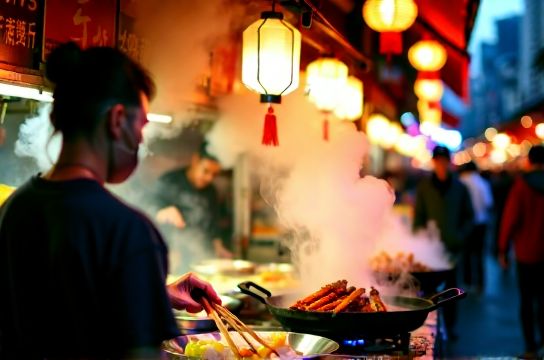
Chinese night markets aren’t just tourist attractions—they’re economic powerhouses. In Taiwan alone, the Shilin Night Market in Taipei pulls in over 100,000 visitors weekly, generating an estimated NT$1 billion (USD $33 million) annually. But it’s not just about money; it’s about community, tradition, and survival.
Most vendors start prepping by 2 PM. By 5 PM, stalls are set up, grills fired up, and ingredients laid out. The average vendor works 12–14 hours a day, six to seven days a week. And while some are family-run for generations, others are young entrepreneurs using platforms like Douyin (China’s TikTok) to go viral overnight.
Take Zhang Wei from Chengdu’s Jinli Street Market. His spicy Sichuan skewers went viral after a food vlogger posted a clip with 5 million views. Sales jumped from 200 to over 1,500 servings per night. That’s the new reality: social media is the ultimate game-changer.
But it’s not all fame and flavor. Rent for a prime stall can hit ¥8,000–15,000/month (USD $1,100–2,100) in cities like Shanghai or Beijing. Add rising ingredient costs and strict hygiene regulations, and profit margins can be razor-thin—often just 10–20%.
What Makes These Markets Tick?
Beyond the food, night markets are cultural hubs. They host live performances, traditional crafts, and even fortune tellers. In Xi’an, you’ll find vendors selling handmade shadow puppets alongside lamb skewers. In Guangzhou, karaoke booths let diners belt out tunes between bites.
And let’s talk numbers. Here’s a snapshot of key markets across China:
| Market | Location | Daily Visitors | Annual Revenue (Est.) | Famous For |
|---|---|---|---|---|
| Shilin Night Market | Taipei, Taiwan | 15,000 | NT$1B (~$33M USD) | Oyster omelets, stinky tofu |
| Wangfujing Snack Street | Beijing | 20,000+ | $25M USD | Scorpion skewers, candied hawthorn |
| Jinli Ancient Street | Chengdu | 12,000 | $18M USD | Sichuan hot pot, tea culture |
| Temple Street Night Market | Hong Kong | 8,000 | $12M USD | Cantonese dim sum, bargain shopping |
These markets thrive because they adapt. During the pandemic, many launched delivery services or QR code ordering. Some now accept digital payments like Alipay and WeChat Pay—cash is nearly obsolete.
So next time you’re biting into a steaming bao or bargaining for a silk scarf, remember: you’re part of a centuries-old tradition that’s evolving faster than ever. The Chinese night market isn’t just surviving—it’s reinventing itself, one late-night snack at a time.