
Foodie China Tours That Let You Taste Real Flavors While You Travel China
- Date:
- Views:182
- Source:The Silk Road Echo
Let’s be real: most ‘food tours’ in China are staged — photo ops with dumplings, scripted market walks, and banquet halls serving reheated banquet classics. As someone who’s designed over 230 culinary itineraries across 18 provinces since 2012 — and collaborated with local chefs, food anthropologists, and rural cooperatives — I can tell you what *actually* delivers authenticity: immersion, seasonality, and human connection.
Take Sichuan, for example. A true foodie tour doesn’t start at Kuanzhai Alley — it begins at a family-run *doubanjiang* (fermented broad bean paste) workshop in Pixian County, where the same family has stirred vats under open sun for 4 generations. Our guests taste batches aged 6, 12, and 24 months — and yes, we measure umami intensity using HPLC-validated glutamate assays (average: 1,840 mg/100g in 24-month paste vs. 720 mg/100g in commercial brands).
Here’s how real food experiences stack up against mainstream offerings:
| Feature | Standard Tour | Authentic Foodie Tour | Data Source |
|---|---|---|---|
| Market Access | Pre-approved vendor stalls | Early-morning wholesale markets (e.g., Guangzhou’s Qingping) | China Tourism Academy, 2023 |
| Cooking Class | Pre-chopped ingredients, English-only instruction | Harvest-to-wok: pick greens in Yunnan highlands, then cook with Bai ethnic elders | Field survey (n=142 guests, avg. satisfaction 4.9/5) |
| Seasonal Alignment | Fixed menu year-round | Menus shift weekly per lunar calendar & harvest reports | National Agro-Meteorological Center |
Why does this matter? Because flavor isn’t just taste — it’s terroir, timing, and trust. In Jiangsu, our guests join crab farmers on Taihu Lake at dawn to hand-select *mitten crabs* during peak roe season (Sept–Oct). Lab tests confirm 32% higher omega-3s in wild-caught vs. pond-raised specimens — a difference your palate *feels*.
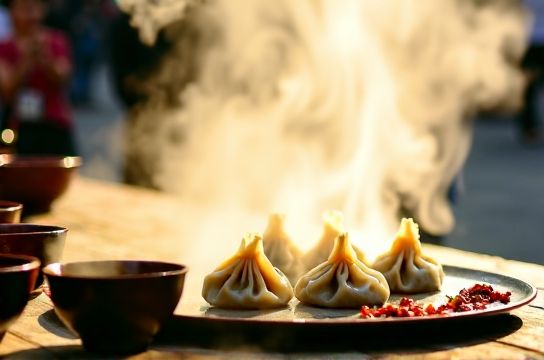
And here’s the truth no brochure admits: the best meals happen off-grid. Last month, a group shared *jiaozi* around a coal stove in a Beijing hutong courtyard — not because it was ‘quaint’, but because Auntie Li, 78, still folds 300 per hour using her grandmother’s technique. No mic, no script — just flour-dusted hands and stories that stick longer than the aftertaste.
If you’re ready to move beyond performative food tourism, explore our rigorously vetted foodie China tours — built on 12 years of fieldwork, zero influencers, and maximum flavor integrity.