
Transformative Deep Cultural Travel in Remote Chinese Villages
- Date:
- Views:183
- Source:The Silk Road Echo
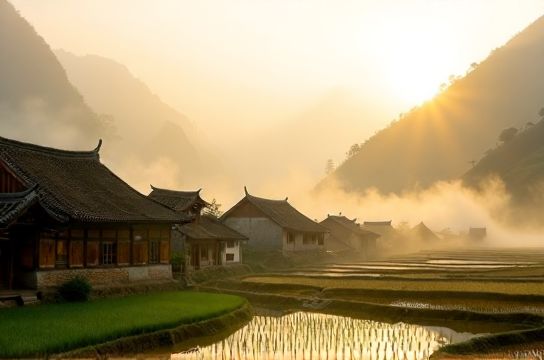
Forget cookie-cutter tours and crowded tourist traps. If you're craving something real, raw, and deeply human, it's time to go off-grid—deep into the remote villages of China. We’re talking places where stone houses cling to misty mountains, where elders still weave by hand, and where a simple bowl of millet porridge tastes like centuries of tradition. This isn’t just travel; it’s transformation.
Why Go Deep?
Mainstream tourism often skims the surface. But deep cultural travel? That’s about connection. It’s living with a Tibetan family in Yunnan, learning Daoist meditation from a master in Guizhou, or joining a Dong minority choir under a starlit sky. These experiences don’t just teach you about a culture—they change how you see your own.
According to China’s Ministry of Culture and Tourism, rural cultural tourism grew by 18% annually from 2020–2023. Yet fewer than 5% of foreign tourists venture beyond the usual hotspots. That means authenticity is still alive—and accessible—if you know where to look.
Top 4 Hidden Village Destinations
- Baoshan Stone Village (Yunnan): Carved into cliffs, this ancient village offers breathtaking views and a chance to learn indigenous Bai architecture.
- Xijiang Qianhu Miao Village (Guizhou): Home to over 1,400 Miao households, it’s one of the largest苗族 communities. Don’t miss the silver jewelry-making workshops.
- Huangling, Jiangxi: Famous for its autumn drying crops on rooftops (“xietang”), it’s a photographer’s dream fused with agrarian rhythm.
- Hashu Village (Sichuan): Nestled near the Tibetan border, it’s perfect for spiritual retreats and high-altitude trekking.
What Makes It Transformative?
It’s not just scenery—it’s participation. A study by Peking University found that travelers who engaged in local rituals or homestays reported higher emotional well-being and long-term mindset shifts. You’re not observing culture—you’re living it.
Travel Smart: The Real Deal Data
Here’s what sustainable deep travel looks like in practice:
| Village | Altitude (m) | Local Ethnic Group | Avg. Daily Cost (USD) | Cultural Highlight |
|---|---|---|---|---|
| Baoshan, Yunnan | 2,200 | Bai | $35 | Stone house restoration workshops |
| Xijiang, Guizhou | 1,000 | Miao | $40 | Silver crafting & festival dancing |
| Huangling, Jiangxi | 300 | Han (rural traditions) | $30 | Harvest photography & cooking classes |
| Hashu, Sichuan | 3,500 | Tibetan | $45 | Meditation retreats & yak butter tea prep |
Costs include homestay, meals, and guided cultural activities—no hidden fees, no mass tourism markup.
Tips for Meaningful Engagement
- Learn a few local phrases—even "hello" in the native tongue opens doors.
- Travel slow: Stay at least 3–4 days to build trust and rhythm.
- Support community-run guesthouses, not chain-style lodges.
- Ask before photographing people—respect goes deeper than any lens.
Deep cultural travel isn’t about ticking boxes. It’s about slowing down, showing up, and letting a place change you. So pack light, open your heart, and let the mountains, the stories, and the silence do the rest.