
The Art of Slow Travel: Meditating in a Shaolin Temple
- Date:
- Views:279
- Source:The Silk Road Echo
Let’s be real—travel these days feels like a checklist. Snap a photo, grab a coffee, post it online, move to the next spot. But what if you slowed down? Like, *really* slowed down? Enter slow travel: not just seeing places, but feeling them. And there’s no better place to practice this than deep in the mountains of Henan, China, at the legendary Shaolin Temple.
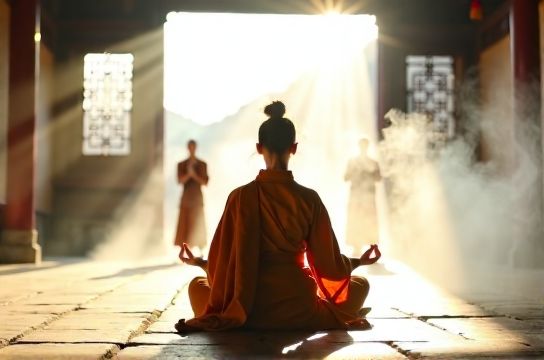
Forget luxury resorts or Insta-famous rooftops. This is about stripping it all back. Imagine waking up before sunrise, wrapped in mist, the only sound being monks chanting and the soft thud of kung fu practice in the courtyard. That’s what I experienced during my week-long stay at the temple—a digital detox before breakfast, meditation sessions that rewired my brain, and silence so thick you can hear your thoughts (and trust me, mine needed organizing).
Slow travel isn’t about ticking off landmarks. It’s about presence. At Shaolin, time moves differently. There’s no Wi-Fi, no rush, just rhythm—breath, movement, stillness. Each morning started with qigong under the watchful eyes of ancient cypress trees. Then seated meditation, where even the sparrows seemed to hush. By day, I wandered through temple halls filled with centuries of history, or sat by the stream scribbling in my journal, finally catching up with myself.
What surprised me most wasn’t the martial arts demo (though flipping monks never get old)—it was the simplicity. Meals were plant-based, served in silence. Beds? Hard mats on wooden floors. But here’s the thing: I’ve never slept better. Without distractions, my body reset. My mind cleared. I wasn’t just visiting a place—I was becoming part of its energy.
And that’s the magic of slow travel. It turns tourism into transformation. You’re not a spectator; you’re a participant. Whether you’re trying basic kung fu stances or learning to meditate without counting the minutes, you’re engaging deeply. The temple doesn’t offer five-star comforts, but it gives something rarer: authenticity.
Now, I’m not saying everyone should live like a monk. But imagine bringing a little of that mindset home. What if we traveled less often—but more meaningfully? Spent three days in one village instead of four countries in a weekend? That’s the core of slow travel: depth over distance.
So next time you plan a trip, ask yourself: Am I collecting stamps for my passport, or memories for my soul? If you want the latter, book that train to Dengfeng. Pack light. Leave your phone in the hotel. Let the gong guide your day. Because sometimes, the best way to see the world is to stop moving—and just be.