
Echoes of the Silk Road: Tracing History in Dunhuang
- Date:
- Views:256
- Source:The Silk Road Echo
Ever heard of a place where ancient traders, monks, and artists all left their mark on history? Welcome to Dunhuang—a desert gem tucked away in western China that was once the beating heart of the Silk Road. If walls could talk, the caves here would be spilling secrets from over a thousand years ago.
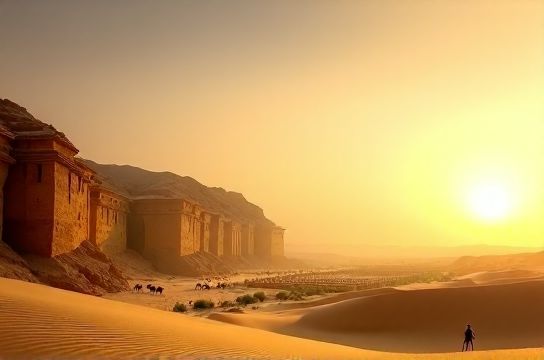
Back in the day, Dunhuang wasn’t just a pit stop—it was *the* cultural crossroads. Picture this: camel caravans winding across endless sands, carrying silk, spices, and stories from China to Persia, India, and beyond. And right in the middle of it all? Dunhuang, standing guard like a time-traveling gatekeeper.
But what really puts Dunhuang on the map—literally and figuratively—are the Mogao Caves. Also known as the Thousand Buddha Grottoes, this UNESCO World Heritage site is home to over 700 caves carved into cliffs, with nearly 500 still decorated with jaw-dropping murals and statues. We’re talking vibrant frescoes showing celestial dancers, intricate Buddhist tales, and colors so bold they’ve survived centuries of wind, sand, and time.
These caves weren’t just art galleries—they were spiritual hubs. Monks meditated, pilgrims prayed, and travelers scribbled notes (yes, like ancient social media check-ins) in these sacred spaces. The Library Cave, discovered in the early 1900s, blew historians’ minds when it revealed tens of thousands of manuscripts in multiple languages—Sanskrit, Tibetan, even old Hebrew. It’s like someone buried a time capsule of human thought and faith.
And let’s not sleep on the city’s vibe today. Modern Dunhuang blends old and new like a perfectly spiced kebab. You can ride a camel at Crescent Lake, snap surreal shots of sand dunes under starry skies, then grab a bowl of hand-pulled laghman noodles after exploring cave #257—home to that famous ‘nine-colored deer’ painting everyone’s obsessed with.
Thanks to China’s growing focus on cultural tourism, Dunhuang isn’t just surviving—it’s thriving. High-speed trains now connect it to major cities, and digital projects are bringing the murals to life online for global audiences. But don’t let the tech fool you—the soul of Dunhuang is still rooted in its past.
So why does any of this matter today? Because Dunhuang reminds us how connected the world has always been. Long before Instagram and TikTok, ideas, beliefs, and art traveled along dusty roads and changed everything. It’s proof that culture isn’t static—it moves, mixes, and evolves.
If you're into history that feels alive, art that tells stories, and places that echo with the footsteps of legends, Dunhuang should be on your radar. It’s not just a relic—it’s a revelation.