
Top UNESCO Sites China You Must Visit for Cultural Depth
- Date:
- Views:219
- Source:The Silk Road Echo
If you're craving a journey through time, culture, and jaw-dropping architecture, China's UNESCO World Heritage Sites are your golden ticket. With over 50 official listings — from ancient city walls to misty mountain temples — these spots aren't just tourist traps; they're living testaments to thousands of years of human brilliance. Let’s dive into the top five UNESCO sites in China that deserve a front-row spot on your travel bucket list.
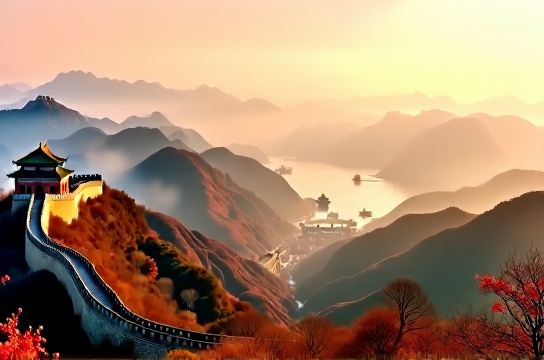
The Great Wall: More Than Just Bricks and Scenery
You’ve seen it in movies, on postcards, and maybe even in VR. But nothing compares to standing atop the Great Wall of China, feeling the wind whip through your hair as you gaze across rolling hills stitched together by stone. Built over centuries, primarily during the Ming Dynasty, this 13,000+ mile marvel was designed to protect against northern invasions. Today? It protects your Instagram feed with epic skyline shots.
Pro tip: Skip the crowded Badaling section. Head to Jiankou or Mutianyu for fewer crowds and better photo ops.
Forbidden City: Power, Politics & Palace Drama
Situated in the heart of Beijing, the Forbidden City served as the imperial palace for 24 emperors during the Ming and Qing dynasties. Spanning 180 acres and boasting 980 surviving buildings, it’s a masterclass in symmetry, symbolism, and serious Feng Shui game.
Built in 1420, this architectural titan reflects cosmic order — with the emperor literally at the center of the world. Fun fact: The number nine (symbolizing imperial power) pops up everywhere, from roof ridges to nail patterns.
Xi’an Terracotta Army: Warriors That Never Retire
Discovered in 1974 by farmers digging a well, the Terracotta Army is one of archaeology’s greatest hits. Commissioned by Emperor Qin Shi Huang around 210 BCE, this underground legion of 8,000 life-sized soldiers, horses, and chariots was built to protect the emperor in the afterlife.Each warrior has a unique face — no mass production here. Talk about artisan goals.
| Site | Year Inscribed | Visitor Count (Annual) | UNESCO Criteria |
|---|---|---|---|
| Great Wall | 1987 | 10 million+ | i, ii, iii, iv, vi |
| Forbidden City | 1987 | 17 million | i, ii, iii, iv |
| Terracotta Army | 1987 | 6.5 million | i, iii, iv, vi |
| Mount Tai | 1987 | 3 million | i, ii, iii, iv, v, vi, vii |
| West Lake (Hangzhou) | 2011 | 20 million | iii, vi |
Mount Tai: Where Heaven Meets Hiking Boots
In Shandong Province, Mount Tai isn’t just a mountain — it’s a spiritual staircase. For over 3,000 years, emperors performed sacred Fengshan rituals here to honor heaven and earth. Today, pilgrims and hikers alike climb its 7,000 steps seeking enlightenment — or at least a killer sunrise view.
As the most revered of China’s Five Great Mountains, Mount Tai blends natural beauty with deep philosophical roots in Confucianism, Daoism, and Buddhism.
West Lake, Hangzhou: Poetry in Motion
Last but not least, West Lake feels like a classical Chinese painting sprung to life. With willow-fringed shores, pagodas rising from mist, and lotus blossoms drifting on calm waters, this cultural landscape inspired poets, painters, and emperors for centuries.
Its design embodies the idealized fusion of nature and humanity — so perfectly balanced, it looks effortless. Spoiler: It took hundreds of years of careful landscaping.
Whether you’re strolling Su Causeway at dusk or sipping Longjing tea in a hillside pavilion, West Lake whispers serenity.
So, what are you waiting for? Pack your curiosity, charge your camera, and step into history. These UNESCO wonders don’t just showcase China’s past — they invite you to become part of it.