
Explore Dunhuang's Mogao Caves a UNESCO Treasure Site
- Date:
- Views:268
- Source:The Silk Road Echo
Ever dreamed of stepping into a time capsule filled with ancient art, spiritual wisdom, and centuries-old stories whispering from the walls? Welcome to the Mogao Caves in Dunhuang—a real-life masterpiece carved into sandstone cliffs that’s been silently guarding China’s cultural soul since the 4th century.
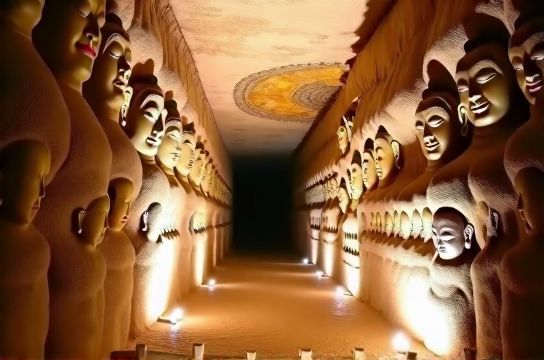
Nestled on the edge of the Gobi Desert along the old Silk Road, this UNESCO World Heritage Site isn’t just a bunch of caves—it’s a living museum of Buddhist art, history, and human creativity. With over 735 documented caves and nearly 45,000 square meters of murals, Mogao is one of the most significant repositories of Buddhist heritage on Earth.
Why the Mogao Caves Are a Must-See
Imagine walking through dimly lit chambers adorned with vibrant frescoes of flying apsaras (celestial dancers), golden Buddhas glowing in candlelight, and scriptures written in forgotten languages. That’s Mogao for you—a spiritual Disneyland minus the crowds (if you go off-season).
The site reached its artistic peak between the 7th and 10th centuries during the Tang and Song dynasties. Over 1,000 years of devotion, trade, and cultural exchange are etched into every brushstroke.
Quick Facts at a Glance
| Category | Details |
|---|---|
| Location | Dunhuang, Gansu Province, China |
| UNESCO Listed | 1987 |
| Total Caves | 735 |
| Open to Public | ~10-15 rotating caves |
| Murals Area | 45,000 m² |
| Statues | Over 2,000 |
| Best Time to Visit | April–October |
Pro tip: Only a fraction of the caves are open each day to preserve their fragile interiors. Booking tickets weeks in advance via the official Mogao Grottoes website is a no-brainer.
The Hidden Gem: Cave 17 — The Library Cave
In 1900, a Taoist monk named Wang Yuanlu stumbled upon Cave 17—later dubbed the Library Cave. Inside? A mind-blowing stash of 50,000+ manuscripts, scrolls, and texts in Sanskrit, Tibetan, Uighur, and classical Chinese, dating back to the 4th–11th centuries. It was like finding a hard drive from the Middle Ages.
Tragically, many artifacts were taken by Western explorers like Aurel Stein and Paul Pelliot. Today, these treasures are scattered across museums in London, Paris, and Tokyo—a bittersweet reminder of colonial-era collecting.
Visitor Tips You Can’t Ignore
- Book Early: Daily visitor caps exist. Opt for the A-category ticket (CNY 238) for access to high-value caves.
- No Photos Inside: Flash ruins pigments. Respect the rules!
- Hire a Guide: English tours bring the murals to life with stories of monks, merchants, and miracles.
- Beat the Heat: Summer temps hit 40°C. Mornings are cooler and less crowded.
And don’t skip the Dunhuang Museum nearby—it gives crucial context before you enter the caves.
Final Thoughts
The Mogao Caves aren’t just about religion or art—they’re about connection. Between East and West. Past and present. Human and divine. Whether you're a history geek, a photography lover, or just chasing awe, this place delivers.
So pack your curiosity, charge your camera (for the exterior shots!), and get ready to walk where silk traders and monks once did. Dunhuang’s Mogao Caves aren’t just a destination—they’re a journey through time.