
Living Heritage: Weaving Batik with Miao Artisans in Guizhou
- Date:
- Views:322
- Source:The Silk Road Echo
Ever dreamed of stepping into a living storybook where every thread tells a tale? Welcome to Guizhou, China—a hidden gem nestled in misty mountains and vibrant ethnic culture. Here, the Miao people don’t just preserve their heritage; they breathe life into it through batik art, a centuries-old tradition that’s equal parts magic and mastery.
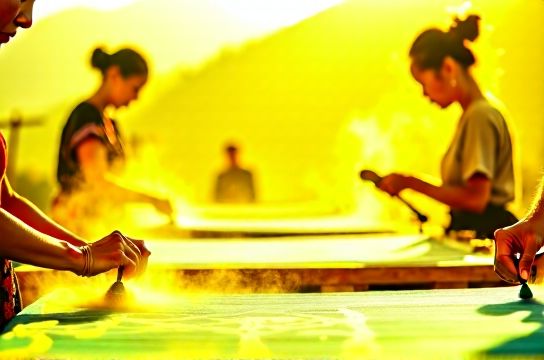
If you’re craving more than just photo ops and souvenir shops, join me on a journey deep into the heart of Miao villages, where indigo-dyed fabrics whisper ancestral secrets and grandmothers teach ancient patterns like lullabies.
Why Guizhou? Why Now?
Guizhou is home to over 18 recognized ethnic minorities, with the Miao being one of the most culturally rich. Their batik technique—using beeswax and plant-based dyes—isn’t just craft; it’s identity. UNESCO recognizes this textile tradition as intangible cultural heritage, and yet, fewer than 5,000 artisans still practice it fluently today.
Tourism is rising, but authentic experiences remain accessible—if you know where to look.
The Batik Process: Wax, Dip, Repeat (But Make It Art)
Miao batik isn’t stamped or printed—it’s hand-drawn with molten beeswax using a tool called a xie zhan (writing knife). Intricate motifs—dragons, flowers, cosmic spirals—are drawn freehand onto cotton cloth, then dyed in natural indigo vats. The wax resists the dye, creating stunning negative-space designs.
After multiple dips and sun-dry cycles, the wax is boiled off, revealing the final masterpiece. One piece can take up to 3 weeks to complete.
| Stage | Time Required | Key Tools |
|---|---|---|
| Design Sketching | 1–2 days | Pencil, cloth |
| Wax Application | 3–7 days | Xie zhan, beeswax |
| Indigo Dyeing | 5–10 days | Dye vats, wood ash |
| Wax Removal | 1 day | Boiling water |
Best Villages to Experience Authentic Miao Batik
- Xijiang Qianhu Miao Village – The largest Miao settlement, offering workshops and homestays. Over 1,400 wooden stilt houses dot the hillsides.
- Langde Village – Smaller and less commercialized. Known for intimate artisan demos and traditional song performances.
- Banglao Village – A hidden spot where elders still wear full traditional dress daily. Rare chance to see ceremonial batik creation.
How to Participate Responsibly
This isn’t a theme park. These are real communities preserving real traditions. So how do you engage without exploiting?
- Support local cooperatives – Buy directly from women-led groups like Sisters’ Workshop in Danzhai.
- Take a class – Many artisans offer 2–3 hour intro sessions (~$15 USD). You’ll leave with your own mini batik piece—and respect.
- Ask before photographing – Some designs are sacred or family-specific.
Final Thoughts: More Than a Souvenir
When you hold a piece of Miao batik, you’re not just holding fabric. You’re holding patience. History. Resistance. Beauty born from slow, intentional hands.
So skip the mass-produced trinkets. Come to Guizhou. Sit beside a master artisan. Let her guide your shaky hand across the cloth. That moment—when wax meets fiber and culture meets curiosity—that’s travel with soul.