
Echoes of the Silk Road: Cultural Encounters from Dunhuang to Kashgar
- Date:
- Views:265
- Source:The Silk Road Echo
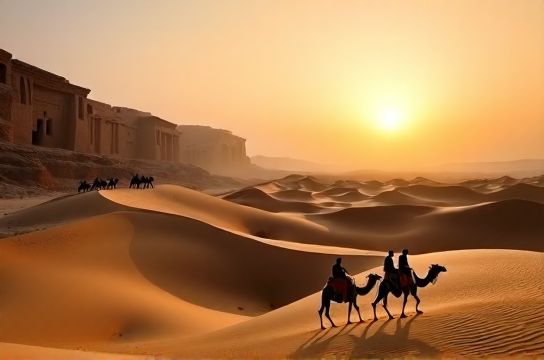
Imagine riding a camel under golden sands, where ancient traders once bartered spices, silk, and secrets beneath starlit skies. Welcome to the Silk Road—a legendary network that didn’t just move goods, but shaped civilizations. Today, we’re diving deep into one of its most mesmerizing stretches: Dunhuang to Kashgar. Buckle up—this journey is equal parts history, culture, and pure wanderlust.
Why This Route Still Matters
This 1,200-kilometer stretch across western China and into Xinjiang isn’t just scenic—it’s a cultural time capsule. For over a millennium, Buddhist monks, Persian merchants, and Turkic nomads crossed these lands, leaving behind art, languages, and faiths that still echo today.
Dunhuang was the gateway to the West. Its Mogao Caves, with over 490 decorated grottoes, house the world’s finest collection of Buddhist art—spanning 1,000 years. Fast forward to Kashgar, where the Eidgah Mosque pulses with Uyghur life and Central Asian rhythms. Between them? Desert oases, forgotten caravanserais, and the haunting beauty of the Taklamakan.
Road-Trip Snapshot: Key Stops & Stats
Here’s a quick breakdown of the major stops along this epic route:
| City | Distance from Start (km) | Cultural Highlight | Best Time to Visit |
|---|---|---|---|
| Dunhuang | 0 | Mogao Caves, Crescent Lake | Apr–Jun, Sep–Oct |
| Hamis | 380 | Bezeklik Thousand Buddha Caves | May–Sep |
| Turpan | 500 | Ancient Jiaohe City, Grape Valley | May–Aug |
| Kashgar | 1,200 | Kashgar Sunday Market, Id Kah Mosque | Mar–May, Sep–Nov |
Pro tip: Spring and autumn offer mild temps and clear skies—perfect for photography and exploring ruins without melting.
Dunhuang: Where Art Met the Desert
No visit is complete without the Mogao Caves. These 735 caves contain over 45,000 square meters of frescoes and thousands of statues. The Library Cave, sealed for centuries, revealed 50,000+ manuscripts in Chinese, Sanskrit, and Sogdian—proof of Dunhuang as a true intellectual crossroads.
Visit early morning to avoid crowds. And don’t skip Crescent Lake—a mystical oasis surrounded by towering dunes.
Turpan: The Furnace of Cultures
At 154m below sea level, Turpan is one of Earth’s hottest spots—summer temps can hit 47°C (117°F). But it’s also one of the most fertile thanks to the karez irrigation system, an underground marvel older than the pyramids.
Wander the ruins of Jiaohe, a 2,000-year-old city carved from rock. Then cool off in Grape Valley, where Uyghur families grow over 60 varieties of grapes—and serve sweet tea with warm hospitality.
Kashgar: The Heartbeat of the Western Frontier
If the Silk Road had a soul, it lives in Kashgar. The Sunday Market is legendary—a sprawling bazaar where you’ll find everything from hand-forged knives to live sheep. It’s chaotic, colorful, and utterly authentic.
Don’t miss the Id Kah Mosque, Central Asia’s largest mosque, where thousands gather each Friday. The surrounding old town, with its mud-brick alleys and wooden balconies, feels like stepping into 9th-century Samarkand.
Travel Tips for Modern Explorers
- Permits: Foreign travelers need a Xinjiang Travel Permit—apply through your tour agency.
- Transport: High-speed rail runs from Dunhuang to Urumqi; shared minibuses connect smaller towns.
- Language: Mandarin works in cities; Uyghur dominates rural areas. Learn a few phrases—locals appreciate the effort!
- Respect: Dress modestly at religious sites. Ask before photographing people.
The Silk Road isn’t just history—it’s alive. From Dunhuang’s sacred murals to Kashgar’s bustling bazaars, every mile tells a story. So pack your curiosity, charge your camera, and let the desert winds carry you back in time.