
From Silk Roads to Stone Paths: Tracing History in Dunhuang
- Date:
- Views:227
- Source:The Silk Road Echo
Ever dreamed of walking where ancient merchants, monks, and warriors once trod? Welcome to Dunhuang—a time capsule carved into the Gobi Desert, where every grain of sand whispers stories of the Silk Road. This isn’t just another Chinese city; it’s a living museum of cross-cultural magic.
Why Dunhuang Still Matters
Situated at the edge of western China’s Gansu Province, Dunhuang was the gateway between East and West for over 1,000 years. From the 2nd century BCE to the 14th century, this oasis town buzzed with traders hauling silk, spices, and ideas across continents. But what really makes Dunhuang shine? The Mogao Caves—also known as the Thousand Buddha Grottoes.
Built between 366 CE and the Yuan Dynasty, these 735 caves house over 45,000 square meters of frescoes and 2,000+ painted sculptures. UNESCO calls it “a masterpiece of Buddhist art,” and honestly? They’re not overselling.
Must-See Spots & Visitor Stats (2023)
Let’s break down the top attractions with real data:
| Site | Annual Visitors | Best Time to Visit | Entry Fee (CNY) |
|---|---|---|---|
| Mogao Caves | 1.8 million | May–September | 190 (standard), 200 (digital tour) |
| Yumen Pass (Jade Gate) | 420,000 | April–October | 40 |
| Dunhuang Museum | 310,000 | Year-round | Free |
| Crescent Lake & Singing Sand Dunes | 1.2 million | Evenings (sunsets!) | 100 |
Pro tip: Book your Mogao tickets weeks in advance via the official site. They limit daily entries to protect the art—smart move, right?
The Real Treasure: Cultural Fusion
What’s wild is how Dunhuang became a melting pot. Persian motifs dance beside Han calligraphy. Sanskrit texts rest next to Tang poetry. In Cave 220, you’ll see dancers styled like Central Asian court performers—proof that globalization isn’t new; it just wore different robes.
The Library Cave discovery in 1900? Mind-blowing. Over 50,000 manuscripts—Buddhist sutras, Jewish prayers, even early chess manuals—were sealed for centuries. Now scattered across London, Paris, and Beijing, they’re slowly being digitized by projects like the Dunhuang Academy Digital Archive.
Plan Like a Pro
- Get there: Fly into Dunhuang Airport (direct from Xi’an or Urumqi) or take the high-speed rail from Zhangye (4 hrs).
- Stay: Opt for a courtyard guesthouse near the city center—authentic vibes, less noise.
- Eat: Try lamb skewers and camel milk tea. Yes, camel milk. It’s creamy, slightly sweet, and weirdly addictive.
Dunhuang isn’t about ticking boxes. It’s about feeling the weight of history under your feet—and realizing how small moments, like a monk painting a mural in 755 AD, echo across millennia.
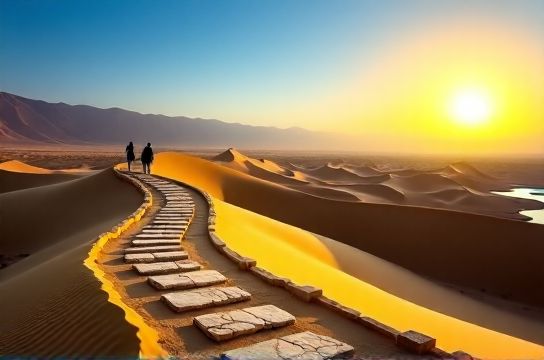
So lace up your boots. The stone paths are waiting.