
Preserving Heritage: How Ancient Towns in China Keep Traditions Alive
- Date:
- Views:349
- Source:The Silk Road Echo
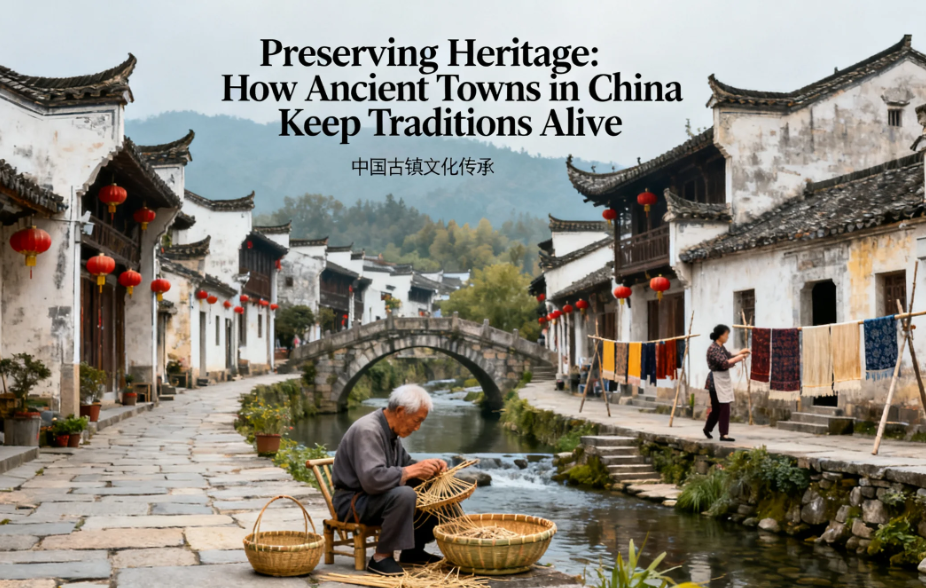
Ever wondered how some places seem frozen in time—yet still totally alive with culture, color, and community? Welcome to the ancient towns of China, where centuries-old traditions aren’t just preserved in museums—they’re lived every single day. From cobblestone streets echoing with morning chatter to lantern-lit festivals that light up entire valleys, these towns are more than tourist spots—they’re cultural time capsules thriving in the modern world.

Take Lijiang in Yunnan Province, for example. Nestled among snow-capped mountains, this UNESCO World Heritage site isn’t just about stunning scenery (though, let’s be real—it’s *incredible*). It’s home to the Naxi people, whose unique Dongba script—one of the last pictographic writing systems on Earth—is still taught and used today. You’ll see elders playing traditional suona horns at weddings, while kids learn ancient melodies on the lusheng flute. It’s not performance for tourists; it’s life.
Then there’s Pingyao, a walled city in Shanxi that dates back over 2,700 years. Walk its stone-paved alleys and you’ll pass old bank vaults from the Qing Dynasty, now turned into museums—but the local vibe is far from stuck in the past. During Spring Festival, the whole town erupts in red lanterns, firecrackers, and shadow puppet shows that tell stories passed down for generations. Families gather to make dumplings by hand, using recipes older than your great-great-grandma.
What makes these towns so special isn’t just their history—it’s how communities actively choose to protect it. In Hongcun, an Anhui village famous for its moon-shaped pond and Ming-era architecture, locals run family-owned guesthouses where visitors sleep in wooden courtyard homes and eat farm-to-table meals grown in nearby fields. These homestays don’t just boost tourism—they keep young people rooted in their heritage instead of moving to big cities.
And let’s talk food—because what’s culture without flavor? In these towns, cuisine is tradition. Think hand-pulled noodles in Datong, sweet osmanthus cakes in Suzhou’s Tongli, or fermented fish soup in Guizhou’s Zhaoxing Dong Village. These dishes aren’t just tasty—they carry stories, seasonal rituals, and ancestral wisdom.
Of course, modernization brings challenges. Some towns face pressure to commercialize, trading authenticity for souvenir shops and Instagram backdrops. But many are fighting back—with government support and grassroots efforts limiting mass tourism and prioritizing sustainable practices.
At the end of the day, China’s ancient towns aren’t just surviving—they’re adapting. They prove that honoring the past doesn’t mean rejecting progress. It means weaving tradition into everyday life so future generations can say, ‘This is who we are.’ So next time you think of heritage, don’t picture a dusty relic. Picture a lantern floating down a canal, a grandmother teaching her granddaughter to weave, or a street musician playing a 1,000-year-old tune. That’s preservation—and it’s very much alive.