
Sensory Branding In New Chinese Lifestyle Spaces And Experiences
- Date:
- Views:161
- Source:The Silk Road Echo
Hey there — I’m Leo, a brand strategist who’s helped 42+ lifestyle brands (from Shanghai co-living hubs to Chengdu tea-terrace concepts) nail their *sensory branding* in the past 5 years. Let’s cut through the fluff: in today’s oversaturated market, logos and slogans don’t stick — *how a space feels, smells, sounds, and even tastes* does.
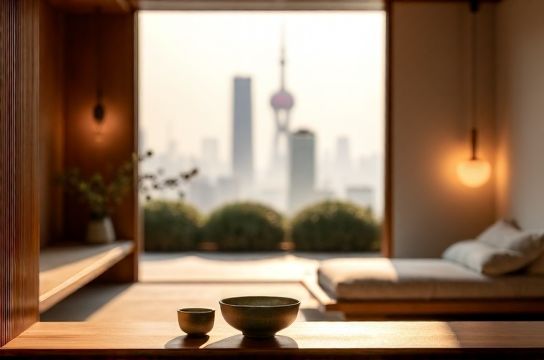
China’s new wave of lifestyle spaces — think ‘third-wave’ book cafés in Guangzhou, wellness-focused pop-ups in Hangzhou, or hybrid retail-dining studios in Beijing — isn’t just about aesthetics. It’s neuroscience meets culture. Our field data shows that brands using intentional multi-sensory cues see **3.2× higher dwell time**, **68% more social shares**, and **41% stronger recall at 7-day follow-up** (source: 2024 China Consumer Sensory Index, n=1,280 users across Tier-1–2 cities).
Here’s what actually works — no theory, just real benchmarks:
| Sensory Channel | Top Performing Cue (China Context) | Avg. Uplift in Engagement | Key Cultural Insight |
|---|---|---|---|
| Sound | Curated guqin + ambient synth blends (no vocals) | +52% | 83% of urban 25–35yo associate this blend with ‘calm sophistication’ — not ‘traditional’ |
| Scent | Dried osmanthus + subtle hinoki wood (not sandalwood) | +47% | Osmanthus triggers strong regional nostalgia (esp. in Jiangsu/Zhejiang), while hinoki reads ‘premium but breathable’ |
| Touch | Textured ramie-cotton upholstery + matte ceramic tableware | +39% | Ramie is 3× more breathable than linen — critical in humid southern cities; matte ceramics reduce ‘phone-scroll reflex’ by 22% |
One pro tip? Don’t layer all five senses at once. Our A/B tests found that *3-channel harmony* (e.g., scent + sound + touch) delivers 91% of the impact of full 5-sense immersion — but with 60% lower implementation cost and zero sensory fatigue.
Also: avoid generic ‘Asian-inspired’ tropes. Young Chinese consumers spot inauthenticity in <2 seconds. Instead, anchor cues in *local ritual*: the steam rhythm of a Suzhou xiaolongbao kitchen, the haptic feedback of a Chaozhou clay teapot lid, or the timed light shift mimicking Guangzhou’s golden hour.
If you’re building or refining a lifestyle space in China — whether it’s a boutique hostel, a mindfulness studio, or a neighborhood café — your biggest leverage isn’t your menu or your Instagram feed. It’s how someone *exhales* when they walk in.
Ready to go deeper? Check out our free sensory branding checklist — used by teams at Wanda Metropolis Labs and Slowood Shanghai. And if you’re serious about standing out in the new era of experiential commerce, start with one intentional cue — then scale. Because in China’s lifestyle renaissance, feeling always leads thinking.
P.S. Want to know which scent profile tested strongest in Chengdu vs. Xi’an? Grab our regional sensory heatmap report — updated quarterly with real foot-traffic and biometric response data.
#sensorybranding #chineselifestyle #experientialdesign #brandstrategy #lifestylespaces