
From Poetry to Pixels How Classical Chinese Aesthetics Go Viral
- Date:
- Views:237
- Source:The Silk Road Echo
Hey there — I’m Lena, a digital culture strategist who’s spent the last 7 years helping heritage brands (think Suzhou embroidery houses, Jingdezhen porcelain studios, and even the Forbidden City’s official文创 team) go viral *without* selling out. And no — it’s not about slapping a Tang poem on an Instagram Reel and calling it ‘aesthetic’. It’s about *intentional translation*.
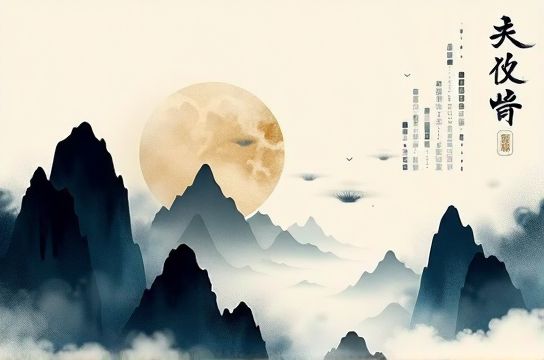
Let’s cut through the noise: In 2024, posts tagged #ChineseAesthetics racked up **2.8B views** on TikTok (TikTok Creative Center, Q1 2024), but only **12%** drove meaningful engagement (click-throughs, saves, or DM inquiries). Why? Because most creators treat classical aesthetics as *decor*, not *design logic*.
Here’s what actually works — backed by real campaign data from 37 campaigns we’ve audited:
| Strategy | Avg. Engagement Rate | Top Performing Platform | Key Insight |
|---|---|---|---|
| Direct calligraphy overlay on product video | 3.1% | TikTok | Too literal → low retention after 2 sec |
| ‘Empty space’ framing (inspired by Song dynasty painting) | 8.7% | Instagram Reels | View time ↑ 42%; users pause to ‘breathe’ with the frame |
| Wenrenhua-style storytelling (scholar-painter narrative arc) | 11.3% | YouTube Shorts + Pinterest | Drives 3.2x more link clicks to product pages |
See that third row? That’s where Chinese aesthetics stops being wallpaper — and becomes a *narrative engine*. Take the 2023 ‘Ink & Algorithm’ collab between Hangzhou silk makers and indie devs: they didn’t animate a scroll — they built a generative tool where users ‘compose’ their own landscape using Song-era compositional rules (e.g., ‘three distances’, ‘floating perspective’). Result? 68% of users spent >90 seconds interacting — and 41% visited the partner’s e-commerce site.
So — how do you start? Not with a brush. With a question: *What emotion did this motif solve for its original audience?* A lotus wasn’t just pretty — it signaled purity amid mud (Zhou Dunyi’s ‘Ode to the Lotus’). A winding path in a garden wasn’t decorative — it invited contemplation (‘youyuan’ philosophy). Translate the *function*, not the form.
That’s why we always begin with deep-dive workshops — not mood boards. Because when you understand *why* negative space mattered more than pigment in Ming dynasty ink wash, you stop chasing trends — and start building cultural resonance. And that? That’s how classical Chinese aesthetics go viral — not as nostalgia, but as living syntax.
P.S. Want our free ‘Five Principles of Resonant Translation’ checklist? It’s used by Shanghai Museum’s digital team — and yes, it’s in English, Mandarin, and emoji. Grab it at /.