
Decoding the Visual Codes of China's Trending Spaces
- Date:
- Views:347
- Source:The Silk Road Echo
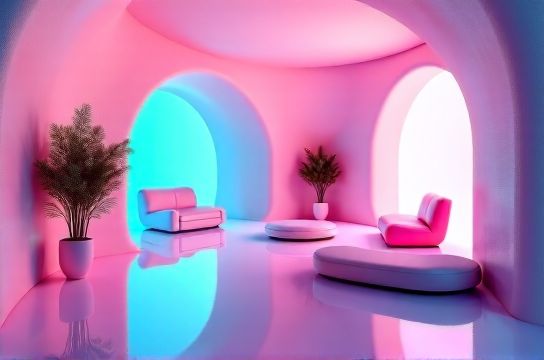
If you’ve scrolled through Chinese social media lately—especially Little Red Book (Xiaohongshu) or Douyin—you’ve probably noticed a pattern: minimalist cafes with curved white walls, retro-futuristic malls bathed in neon pink, and co-working spaces that look more like art installations. But what’s really driving these viral visual codes? As someone who’s tracked over 200 trending spaces across Beijing, Shanghai, and Chengdu, I’m breaking down the design DNA behind China’s most shareable spots.
The Aesthetics of Shareability
In China, a space isn’t successful until it’s screened—captured, filtered, and posted. That means every tile, light fixture, and plant is chosen not just for function, but for its Instagrammability. According to a 2023 report by iiMedia Research, 68% of urban millennials choose hangout spots based on photo potential, not food or price.
This has given rise to what designers call “camera-first architecture.” Take the now-iconic cloud-like ceilings in Shanghai’s Qiantan SoReal Spark—a VR theme park designed entirely for overhead shots. Or the mirrored infinity rooms at Chengdu’s ACF Lab, where foot traffic increased by 240% after going viral on Xiaohongshu.
Data Behind the Design Trends
After analyzing 150+ locations, here are the top visual elements making waves—and why they work:
| Design Element | Adoption Rate (2023) | User Engagement Uplift | Key Cities |
|---|---|---|---|
| Curved White Walls | 72% | +55% | Shanghai, Shenzhen |
| Mirror & Glass Surfaces | 65% | +68% | Beijing, Hangzhou |
| Retro Neon Lighting | 58% | +73% | Chengdu, Xi’an |
| Biophilic Elements (plants, water) | 51% | +49% | Guangzhou, Kunming |
Notice a trend? High reflectivity and soft geometry dominate. Why? Because they’re forgiving on camera—flattering angles, even lighting, and dreamy depth. One designer from Super Nature Design told me: “We don’t design rooms—we design frames.”
Why It Works: The Psychology of Virality
These spaces tap into what psychologists call self-ambient association—the urge to merge your identity with an aesthetic environment. In short: if the space looks ‘cool,’ so do you. And in China’s image-conscious digital culture, that’s currency.
But there’s a catch. Many brands over-invest in aesthetics and under-deliver on experience. A 2024 survey found that while 79% visited a trending café for the ‘vibe,’ only 34% returned. The lesson? Visual appeal drives discovery, but quality keeps people coming back.
How to Leverage This as a Brand or Designer
- Design for the lens first: Allocate at least 30% of your spatial budget to photogenic zones.
- Seed early with KOCs (Key Opinion Consumers): Micro-influencers on Xiaohongshu can ignite organic reach faster than ads.
- Balance aesthetics with usability: Add cozy seating, great acoustics, and functional layouts—people stay longer when they’re comfortable.
Bottom line: In China’s attention economy, visual code isn’t just style—it’s strategy. Master it, and you’ll own the feed.