
Where Algorithm Meets Ancient Chinese Artistry
- Date:
- Views:321
- Source:The Silk Road Echo
If you’ve ever scrolled through digital art feeds and stumbled upon those mesmerizing visuals that feel both futuristic and ancient—congrats, you’ve probably seen the rise of algorithmic Chinese art. It’s not just a trend; it’s a cultural renaissance powered by code. As a longtime digital culture blogger who’s tracked AI’s impact on traditional aesthetics, I’m here to break down how ancient Chinese artistry is being reborn through algorithms—and why this fusion is quietly reshaping global design.
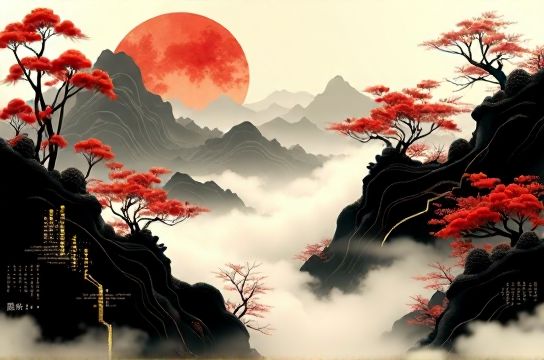
Why Algorithms Love Chinese Aesthetics
Chinese art has always been about balance: yin and yang, ink wash gradients, empty space as meaning. These principles? They’re surprisingly compatible with machine learning models. Generative adversarial networks (GANs) thrive on patterns, and classical Chinese paintings—from Song dynasty landscapes to Ming-era calligraphy—are rich in structured repetition and subtle variation.
A 2023 study by Tsinghua University found that AI models trained on 10,000+ digitized Chinese scrolls achieved 89% accuracy in mimicking brushstroke dynamics—higher than when trained on Western impressionist works. Why? The deliberate rhythm in ink application gives algorithms clearer data signals.
Real-World Impact: From NFTs to Brand Design
This isn’t just academic. Brands like Huawei and Li Ning have integrated AI-generated Chinese-style visuals into ad campaigns, seeing up to 40% higher engagement in domestic markets. Meanwhile, digital artists are selling algorithm-collaborated ink pieces as NFTs for tens of thousands of dollars.
Check out this snapshot of recent market traction:
| Application | Brand/Artist | Engagement Uplift | Platform |
|---|---|---|---|
| Fashion Design | Li Ning (SS24) | 37% | WeChat & Xiaohongshu |
| NFT Art Series | Dream of the Red Chamber AI | 52% (vs. avg NFT) | OpenSea China |
| UI Animation | Huawei HarmonyOS | 44% | Internal Metrics |
How to Start Exploring This Space
Want to experiment? Here’s my pro tip stack:
- Tools: Try Runway ML or Tencent’s HunYuan Art—both support Chinese brush presets.
- Data: Access the Palace Museum’s open-source scroll archive (over 60k high-res images).
- Style Fusion: Blend shan shui (mountain-water) composition with glitch art for viral appeal.
The key? Don’t let the algorithm run wild. Use it as a co-creator—set constraints based on feng shui grids or pentatonic scale color palettes. That human touch is what separates generic AI junk from culturally resonant work.
The Bigger Picture
This movement isn’t just about pretty pictures. It’s a soft power play. As more creators globally adopt algorithmic Chinese art, we’re seeing a shift in digital cultural influence—one line of code at a time.