
The Visual Pulse of Contemporary Chinese Cool
- Date:
- Views:282
- Source:The Silk Road Echo
If you're into streetwear, art, or just what's next in global youth culture, you can't ignore the electric rise of Chinese cool. It’s not just about copying Western trends anymore—China’s creative scene is setting its own rhythm, blending tradition with rebellion, digital flair with raw urban energy. And if you’re still thinking silk cheongsams and calligraphy, it’s time to hit refresh.
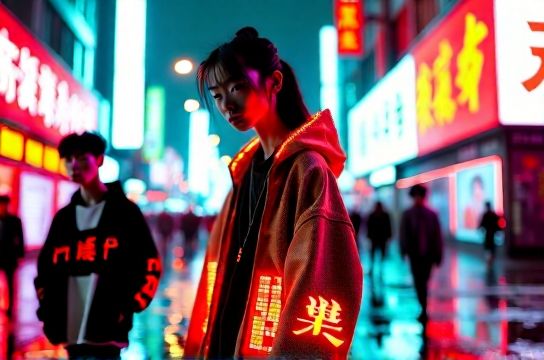
I’ve spent the last three years diving into cities like Chengdu, Shanghai, and Shenzhen, talking to designers, graffiti artists, and sneakerheads. What I found? A cultural shift powered by Gen Z, social media, and serious design chops. Let’s break it down with real data.
The Numbers Don’t Lie: China’s Streetwear Boom
Forget luxury handbags—streetwear is where the money (and attention) is moving. According to a 2023 report by McKinsey, China’s streetwear market grew at 18% CAGR over the past five years, now worth over $35 billion. That’s bigger than France’s entire fashion industry.
| Market | Streetwear Value (2023) | YoY Growth | Key Drivers |
|---|---|---|---|
| China | $35.2B | 18% | Social media, local brands, Gen Z |
| USA | $41.7B | 9% | Limited drops, celebrity collabs |
| Japan | $12.4B | 6% | Heritage brands, resale |
Notice something? China’s growth rate is double that of the U.S. Why? Because homegrown brands like CLOT, BE@RBRICK China, and TYAKASHA aren’t just selling clothes—they’re selling identity. And they’re doing it on platforms like Xiaohongshu and Douyin, where a single viral post can sell out a drop in minutes.
From Hanfu to Hoodies: The New Cultural Remix
What makes contemporary Chinese cool different is the remix. You’ll see hanfu-inspired silhouettes on oversized hoodies, dragon motifs reimagined as glitch art, and traditional ink wash patterns printed on skate decks. It’s not costume—it’s commentary.
In Shanghai’s M50 art district, I met Li Wei, a 26-year-old designer who fuses Song Dynasty aesthetics with punk graphics. His last collection sold out in 11 minutes on Taobao. “We’re not rejecting the past,” he told me. “We’re remixing it for our generation.”
This blend isn’t accidental. A 2022 survey by Alibaba showed that 68% of Chinese consumers aged 18–30 prefer brands that incorporate traditional elements in modern ways. That’s a massive shift from the early 2000s, when ‘Made in China’ meant cheap imitation.
Digital-First, Culture-Always
Another game-changer? The role of digital platforms. While Western brands rely on Instagram and TikTok, China’s creators dominate on Douyin (TikTok’s cousin) and WeChat mini-programs. These aren’t just apps—they’re full ecosystems for discovery, purchase, and community.
Take the success of brand FMACM. They launched exclusively on WeChat, using AR filters to let users ‘try on’ jackets virtually. Their first drop generated $2M in sales in under two hours. No physical store. No PR agency. Just pure digital hustle.
The Takeaway: Look Beyond the Logo
So what’s the lesson? Chinese cool today isn’t about copying—it’s about creating. It’s fast, culturally rooted, and digitally native. Whether you're a brand, buyer, or just culture-curious, this is a wave worth riding.
Ignore it, and you’ll be left behind. Lean in, and you might just catch the next big thing before it goes global.