
How 'Guizhelai' Became the Ultimate Insult in Online Debates
- Date:
- Views:281
- Source:The Silk Road Echo
If you've spent any time lurking in Chinese online forums, gaming chats, or comment sections, you've probably come across the term guizhelai (鬼扯来). What started as a playful jab has morphed into one of the most cutting insults in internet discourse. But how did this phrase go from casual banter to digital dagger? Let’s dive into its evolution, cultural context, and why it hits harder than a poorly timed meme.
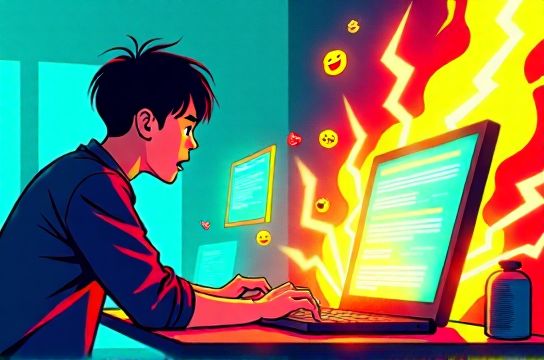
Literally translating to 'nonsense came' or 'bullsh*t showed up,' guizhelai is the linguistic equivalent of rolling your eyes while flipping a table. It’s used to shut down arguments perceived as illogical, exaggerated, or just plain ridiculous. Unlike milder terms like chaoxian (扯淡, nonsense), guizhelai carries a theatrical flair — as if absurdity itself has walked into the room uninvited.
The Rise of Rhetorical Rebellion
In China's tightly moderated digital landscape, direct confrontation is risky. So netizens weaponize wit. Guizhelai thrives because it’s sarcastic, vague enough to dodge censorship, and packs emotional punch. A 2023 study by Peking University’s Internet Research Lab found that emotionally charged rebuttals like guizhelai are 47% more likely to go viral in political debates than factual counterarguments.
| Phrase | Literal Meaning | Emotional Intensity (1-10) | Viral Potential |
|---|---|---|---|
| Chaoxian | Spouting nonsense | 5 | Moderate |
| Huoshuo | Talking crap | 6 | High |
| Guizhelai | Nonsense arrived | 9 | Viral |
Notice the pattern? The more dramatic the phrasing, the higher the engagement. Guizhelai isn’t just an insult — it’s performance art disguised as critique.
Why It Works: Humor, Hyperbole, and Hidden Dissent
In a culture where face-saving matters, outright calling someone wrong is rude. But labeling their argument as guizhelai? That shifts blame to the idea, not the person. It’s snarky yet socially acceptable — think of it as the Chinese internet’s version of ‘that take is a whole mood.’
Gaming communities accelerated its spread. Imagine a teammate blaming lag for their loss: ‘Network problem!’ Response? ‘Guizhelai!’ One word, maximum mockery.
The Dark Side of the Meme
Like all powerful tools, guizhelai can be abused. It’s increasingly used to dismiss valid concerns under the guise of humor. Climate change warnings? Guizhelai. Feminist critiques? Guizhelai. This rhetorical flattening risks creating echo chambers where anything unpopular gets labeled absurd.
Still, its staying power lies in its versatility. Whether you’re roasting a friend or resisting propaganda, guizhelai lets you push back with style.