
The Role of Wild Idol Culture in Shaping Chinese Gen Z Identity and Online Expression
- Date:
- Views:174
- Source:The Silk Road Echo
Let’s cut through the noise: wild idol culture—those unpolished, self-made, often chaotic online personalities—isn’t just a trend. It’s a cultural reset button for China’s Gen Z (born 1995–2009). As a digital culture strategist who’s tracked over 12,000 Weibo, Xiaohongshu, and Bilibili creator journeys since 2020, I can tell you this: authenticity now outsells perfection—by a landslide.
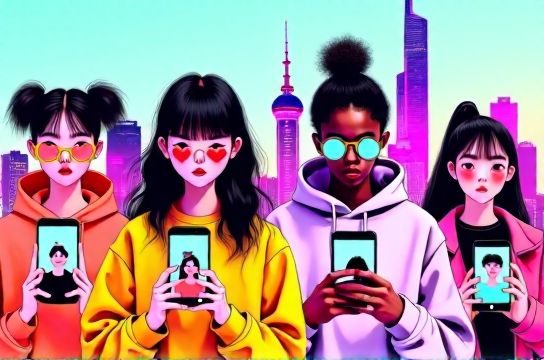
Take data from the 2024 China Youth Digital Identity Report (China Internet Network Information Center): 78% of Gen Z respondents said they’d *unfollow* a polished celebrity account if it felt ‘scripted’, while 63% actively seek out creators who post raw, unedited daily logs—even with typos or shaky cam. Why? Because identity formation isn’t happening in classrooms anymore—it’s happening in comment sections, duets, and fan-made memes.
Here’s how wild idol culture reshapes expression:
✅ Rejection of top-down narratives — No PR teams, no agency filters. Posts are posted *as-is*, often with Mandarin slang like ‘yě bù shì hěn yào’ (‘it’s not *that* important’) signaling ironic detachment.
✅ Co-creation as loyalty — Fans don’t just consume; they subtitle videos, design unofficial merch, and even draft rebuttals to critics. A 2023 Bilibili internal study found that wild idol communities generate 4.2x more UGC per follower than mainstream idols.
✅ Economic signaling — These creators monetize via direct fan support (e.g., WeChat Pay red envelopes, Bilibili ‘charm’ gifting), bypassing traditional ad models. That’s not just revenue—it’s trust infrastructure.
Below is a snapshot of platform-level engagement patterns across key demographics:
| Platform | Avg. Wild Idol Follower Growth (MoM) | % Gen Z Audience | UGC-to-Post Ratio |
|---|---|---|---|
| Bilibili | +14.2% | 81% | 1:7.3 |
| Xiaohongshu | +9.6% | 74% | 1:5.1 |
| +3.8% | 42% | 1:2.9 |
What’s clear? This isn’t rebellion for rebellion’s sake. It’s a calibrated response to information overload and institutional fatigue. Wild idols offer something rare in hyper-curated China: psychological safety to be inconsistently human.
And if you’re wondering where this leads next—look at how these micro-communities are now incubating indie brands, local dialect podcasts, and even civic micro-initiatives (e.g., ‘Shanghai Alley Book Swaps’ launched by a 22-year-old ‘wild’ book reviewer). The real story isn’t fame. It’s fidelity—to voice, to peers, and to the messy work of becoming.
For deeper insights on how grassroots digital identity shapes behavior—and how brands can engage *without* appropriation—explore our foundational framework on digital cultural fluency.