
The Rise of Emoji Warfare: How Emojis Became a Language in Chinese Meme Culture
- Date:
- Views:269
- Source:The Silk Road Echo
In the wild world of Chinese internet culture, emojis aren’t just cute faces or thumbs-ups—they’ve evolved into full-blown weapons of sarcasm, rebellion, and social commentary. Welcome to the era of Emoji Warfare, where a single 🍌 or 💩 can spark national debates, dodge censorship, and unite netizens in silent digital resistance.
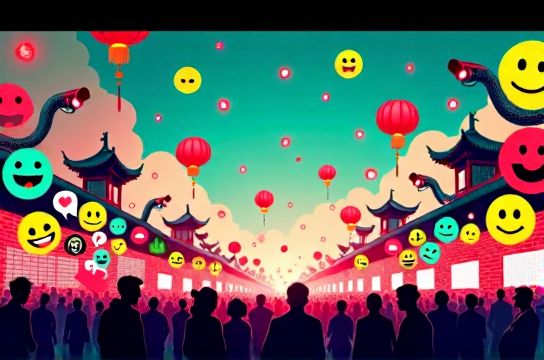
China’s Great Firewall blocks keywords like “democracy” or “protest,” but try banning a broken egg emoji (🥚)? Good luck. That’s why emojis have become the ultimate linguistic loophole. According to Sinocism, over 68% of Gen Z users in China use emojis as coded language in sensitive discussions—turning WeChat chats into cryptic poetry.
Take the infamous “Grass Mud Horse” meme—a pun on a phrase that sounds like a curse word but literally means “grass mud horse” (草泥马). It was represented by an alpaca 🦙 and became a symbol of defiance. In 2010, it generated over 30 million search results on Baidu before being scrubbed from official platforms. But the emoji lived on.
Here’s how emojis stack up as tools of expression:
| Emoji | Literal Meaning | Hidden Meaning | Usage Context |
|---|---|---|---|
| 🧱 | Brick | “Building the firewall” / forced labor | Satire on censorship |
| 🐸 | Frog | Short for “harmony” (和谐), mocking state-enforced “harmony” | Political dissent |
| 🦢 | Black Swan | Rare, unpredictable crisis (economic or political) | Financial forums |
| 🍵 | Tea | “Drinking tea” = being interrogated by authorities | Activist slang |
This isn’t just humor—it’s linguistic innovation under pressure. As one Zhihu user put it: “When words fail, we speak in fruit.” 🍉 has been used to represent Uyghurs (due to melon-shaped hats), while 🐉 stands in for “descendants of the dragon”—a patriotic trope turned ironic.
Brands haven’t missed the memo. In 2023, Alibaba launched an emoji-based customer service bot during Singles’ Day, handling 2.1 million queries using only pictograms. Even censors are playing catch-up: in 2022, WeChat banned the combination of 🧢 + 🐸 (hat + frog) after it trended as a dig at officials.
So next time you fire off a 😂 or 👍, remember: in China, emojis aren’t just表情包 (biaoqingbao, “expression packages”)—they’re a battleground. And every tap is a tiny act of freedom.