
The Curious Case of 'Broken English' Memes on Chinese Social Media
- Date:
- Views:317
- Source:The Silk Road Echo
If you've spent any time scrolling through Chinese social media platforms like Weibo, Douyin, or Xiaohongshu, you've probably stumbled upon memes featuring hilariously mangled English phrases — think 'Good good study, day day up' or 'I am very vegetable'. These so-called 'broken English' memes aren’t just random typos; they’re a cultural phenomenon blending humor, linguistic creativity, and subtle social commentary.
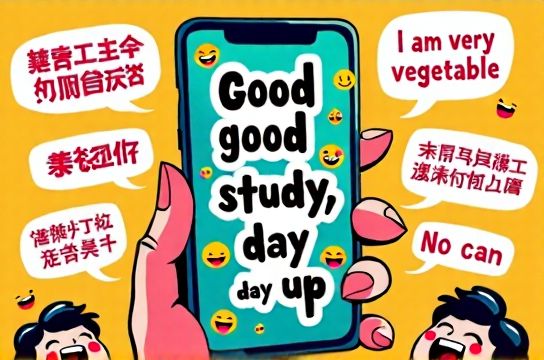
But why do these grammatically questionable phrases go viral? And what do they really say about China’s relationship with English?
The Rise of 'Chinglish' as Internet Gold
'Chinglish' — a portmanteau of 'Chinese' and 'English' — has evolved from classroom mistakes to internet gold. These phrases often stem from literal translations of Chinese idioms, resulting in awkward yet oddly poetic expressions. For instance:
| Original Chinese | Literal Translation (Meme Version) | Actual Meaning |
|---|---|---|
| 好好学习,天天向上 | Good good study, day day up | Study hard and make progress every day |
| 我很菜 | I am very vegetable | I'm really bad at this (e.g., gaming) |
| 我裂开了 | I cracked open | I’m mentally broken / overwhelmed |
These phrases spread like wildfire because they’re relatable, absurd, and instantly recognizable to bilingual netizens. They’re not just jokes — they’re inside references that build community.
Linguistic Rebellion or Playful Pride?
Some scholars argue that 'broken English' memes are a form of soft resistance against the pressure to master Western languages perfectly. In a world where fluent English often equals prestige, mocking its rigid rules feels liberating. As linguist Dr. Li Wen noted, 'These memes reclaim language. They say: we don’t have to speak your way to be heard.'
At the same time, they reflect pride in Chinese expression. The grammar might be 'wrong,' but the emotion is crystal clear — and sometimes, more vivid than proper English could ever be.
Why Foreigners Are Hooked Too
Even non-Chinese speakers find these memes endlessly entertaining. On TikTok, hashtags like #Chinglish and #BrokenEnglish have billions of views. Why? Because they’re unexpected, creative, and human. In an age of AI-generated content, flawed, heartfelt language feels refreshingly real.
In short, 'broken English' isn’t broken at all — it’s reborn.