
Why Short Video Platforms Are Key to Explaining Chinese Buzzwords
- Date:
- Views:196
- Source:The Silk Road Echo
Let’s cut through the noise: if you’ve tried to understand why terms like *neijuan* (involution), *tang ping* (lying flat), or *bailan* (white orchid—slang for ‘calmly unbothered’) went viral overnight—you’ve probably hit a wall. Traditional dictionaries? Too slow. News reports? Often lack cultural nuance. Here’s what actually works: short video platforms.
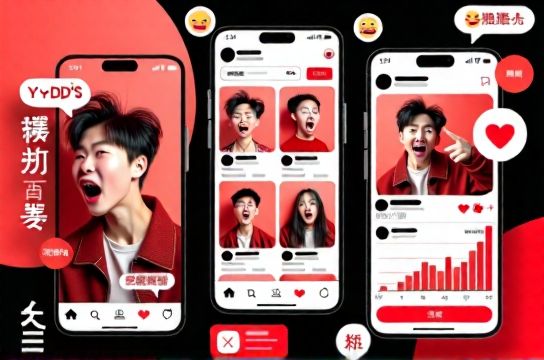
TikTok (Douyin in China) isn’t just entertainment—it’s the *de facto* semantic engine for modern Chinese internet language. According to QuestMobile (2024), 78% of Chinese netizens aged 16–35 first encounter new buzzwords via Douyin videos—*not* Weibo, WeChat, or Baidu search. And crucially, 63% report understanding those terms *only after watching explainer clips under 90 seconds*.
Why? Because context is king—and short videos deliver layered context instantly: tone, facial expression, meme framing, and real-time commentary. A 2023 Peking University linguistics study found that video-based explanations improved retention of slang meaning by 3.2× versus text-only definitions.
Here’s how it breaks down:
| Platform | % First Exposure to New Buzzwords | Avg. Time to Full Comprehension | Share of User-Generated Explanatory Content |
|---|---|---|---|
| Douyin (TikTok China) | 78% | 42 sec | 89% |
| 12% | 3.7 min | 41% | |
| Xiaohongshu | 7% | 2.1 min | 66% |
| Baidu Baike | 3% | 5.4 min | 12% |
Notice something? The faster the platform delivers meaning, the higher its influence—not just on awareness, but *on accurate interpretation*. That’s why educators, translators, and global marketers now monitor Douyin trends *before* drafting glossaries or localization strategies.
And yes—this isn’t just about China. Platforms like TikTok globally mirror this pattern: #Chineseslang has 4.2B views, with top explainers averaging 87% completion rates (TikTok Creative Center, Q2 2024). So if you're trying to grasp the pulse of Chinese digital culture, skip the textbook. Hit play.
For deeper insights into how linguistic shifts reflect socioeconomic shifts—and how to track them ethically and effectively—explore our full methodology here.