
How Chinese Internet Slang Reflects a Generation’s Anxiety and Irony
- Date:
- Views:310
- Source:The Silk Road Echo
You’ve probably seen terms like ‘involution’ (内卷), ‘lying flat’ (躺平), or ‘tang ping’ floating around online. But these aren’t just random buzzwords—they’re actually windows into the soul of modern Chinese youth culture. Behind the memes and sarcastic jokes lies a deeper story about stress, societal pressure, and a generation using humor to cope.
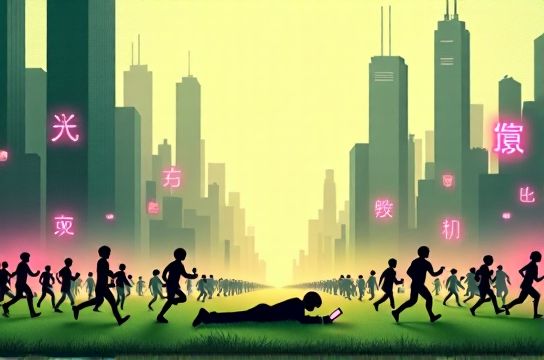
Let’s break it down. Take ‘involution’—or neijuan. Originally an academic term, it’s now slang for that exhausting rat race where everyone works harder but no one gets ahead. Imagine studying 16 hours a day just to keep up with peers who are also studying 16 hours. No real progress, just endless competition. Sound familiar? That’s why young people in China started mocking the grind with phrases like ‘I’m not lazy, I’m just opting out of the madness.’
Then there’s ‘lying flat’—a quiet rebellion. Instead of burning out trying to buy a house, marry early, or climb the corporate ladder, some are saying: ‘Nah, I’ll just… chill.’ It’s not laziness; it’s exhaustion. It’s pushing back against the idea that your worth is tied to productivity. And yes, the government noticed. Officials even criticized the trend, calling it ‘defeatist.’ But that only made it more popular online.
But here’s the twist: a lot of this slang is ironic. When someone says ‘I’m ready to lie flat,’ they might actually be working three part-time jobs. The humor is dark, self-aware, and deeply relatable. It’s like laughing so you don’t cry.
Another favorite? ‘Tang ping’—literally ‘lying down,’ but used to describe emotional numbness. You’re not fighting, you’re not giving up—you’re just… existing. It’s become a symbol of mental fatigue in a high-pressure society where success is narrowly defined.
And let’s not forget ‘996’—working 9 AM to 9 PM, 6 days a week. Once a norm in tech companies, it’s now a punchline. Memes compare it to prison sentences. Yet, despite public backlash, many still feel trapped by expectations.
So why does this matter? Because internet slang isn’t just playful language—it’s social commentary. It shows how young people navigate impossible standards with creativity and sarcasm. They’re not rejecting ambition; they’re questioning what it costs.
In a way, this digital cynicism is a form of resistance. By naming their struggles, they’re reclaiming power. And while authorities may frown upon ‘negative energy,’ the truth is, these words resonate because they’re honest.
So next time you see a meme about ‘involution’ or someone joking about ‘tang ping,’ remember: it’s more than a joke. It’s a cry, a laugh, and a quiet act of defiance—all rolled into one viral phrase.